2026 RWA Policy Weekly: Latest Regulatory Developments in MiCA, Hong Kong, and Singapore and Trading Platform Implementation Updates
Weekly review of EU MiCA tokenized securities compliance, Hong Kong stablecoin sandbox, and Singapore RWA guidelines, plus trading platform updates.
⚠ This article is a multi-asset research on digital assets and does not constitute investment advice. Investment involves risk; please make prudent decisions.
This report is compiled based on public information, with data as of 2026-02. Specific figures and events have not been independently verified; please refer to official regulatory releases for any updates.
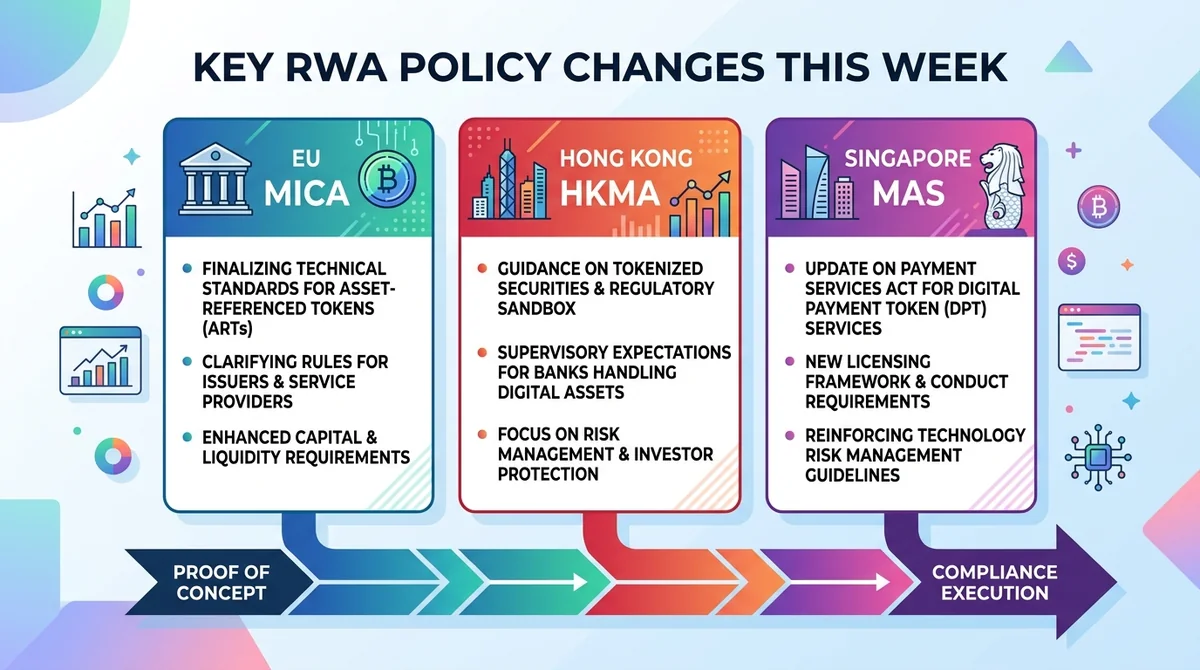
This week's core changes in RWA policy focus on the EU MiCA refining compliance requirements for tokenized securities, Hong Kong's stablecoin sandbox progress, and Singapore's updated regulatory guidelines for tokenized assets. Market attention may shift from proof-of-concept to compliance execution, and trading platforms need to reassess their tokenized asset listing processes and cross-regional licensing requirements.
#Weekly Market Overview
This week, the RWA regulatory landscape continued to tighten and become more granular, with the three major jurisdictions of Europe, Hong Kong, and Singapore advancing regulatory implementation in parallel. We note that trading platforms need to focus on regulatory implementation details rather than remaining at the conceptual level.
#Key Events Review
#What are the most critical changes in RWA policy this week?
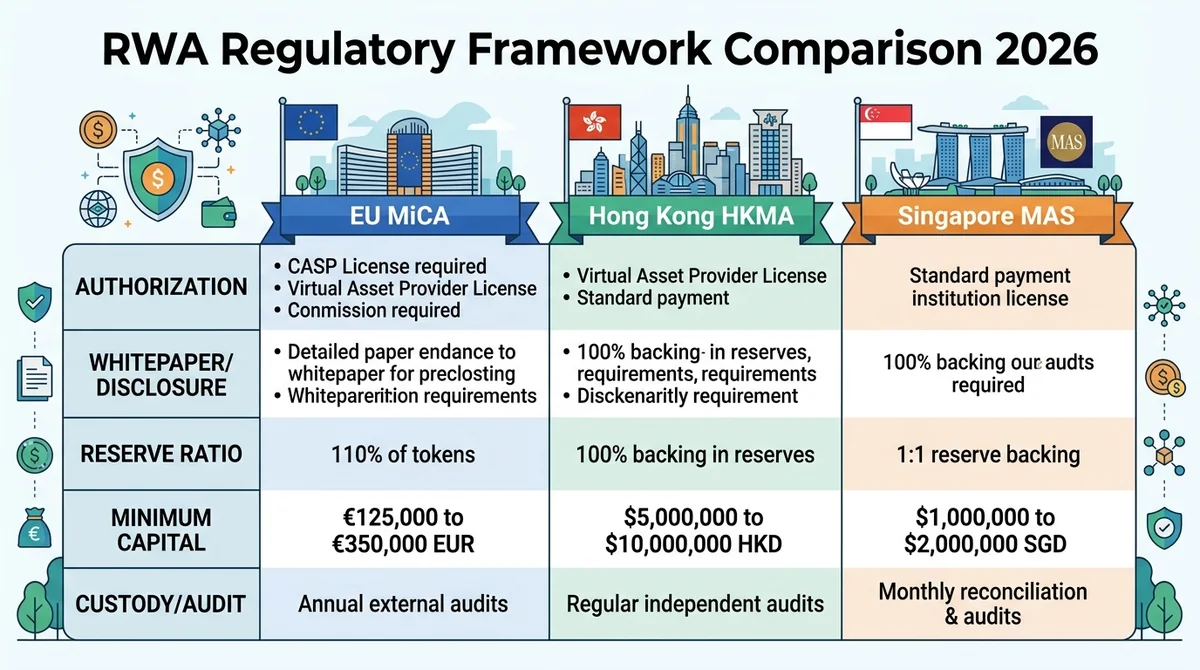
MiCA's latest requirements for tokenized securities: According to public information, MiCA may provide a clear regulatory path for tokenized securities, but requires issuers to obtain authorization and fulfill ongoing disclosure obligations (specific terms need verification). Trading platforms must verify asset qualifications and comply with market abuse rules.
New progress in Hong Kong's stablecoin sandbox: The Hong Kong Monetary Authority's stablecoin sandbox has entered a substantive testing phase, primarily targeting fiat-linked stablecoin issuance and trading scenarios. Participating institutions must meet strict reserve and disclosure requirements (specific list and test scope are not public).
#What is the current progress of the Hong Kong stablecoin sandbox?
Currently, the types of participating institutions and qualification requirements in the sandbox include fiat stablecoin issuers, trading platforms, and related infrastructure service providers (specific institution list to be verified). For trading platforms, listing stablecoins requires key checks on reserve asset disclosure and cross-border compliance.
#What are the new changes in MiCA's compliance requirements for RWA tokenized securities?
Security tokens are required to obtain authorization and publish a whitepaper, and secondary market trading is subject to market abuse prevention rules. Platforms need to conduct due diligence on tokenized assets and pay attention to the compliance boundaries of cross-border issuance and sales. The above is public statement, but specific applicable conditions need further regulatory clarification.
#What is Singapore's latest regulatory guidance on RWA tokenization?
Singapore's MAS regulates asset-backed tokens and digital payment tokens separately, with security tokens subject to the existing securities law framework, and underlying asset custody and audit requirements are emphasized. Platforms need to be licensed and fulfill ongoing reporting obligations. We have not obtained the full text of the latest guidance, and relevant content is pending verification.
#How should trading platforms respond to RWA policy updates?
Platforms should establish a cross-regional compliance framework, closely follow licensing requirements under MiCA and in Hong Kong and Singapore, and strengthen due diligence and risk disclosure for tokenized assets. MSX, as a multi-asset research station, continuously monitors policy developments and adjusts its execution.
#Sector Performance
This week, RWA-related sectors diverged due to regulatory news: tokenized securities and compliant stablecoin projects saw increased attention, while asset-backed tokens lacking a clear compliance path faced more uncertainty (this is a market observation, not a quantitative conclusion). U.S. stock tokenized products such as NVDA, AMD, and TSMC price exposure trading were not directly impacted, but platforms need to reassess their security token attributes (specific impact still needs observation).
#Key Asset Movements
At the trading platform level, leading platforms have begun adjusting their tokenized asset review processes, adding legal opinion letters and underlying asset disclosure requirements (source: market rumors, not individually verified). MSX Trading Lab continues to monitor MiCA and Hong Kong/Singapore licensing developments, providing policy interpretation for research-oriented readers.
#Capital and Sentiment
Market sentiment towards RWA regulation leans cautiously optimistic: a clear regulatory framework helps long-term institutional capital entry, but rising short-term compliance costs may dampen some projects. Investors are more focused on actual implementation cases from the stablecoin sandbox. The above is our analytical opinion and does not constitute investment advice.
#Next Week's Outlook
Next week, we need to monitor: the EU MiCA transitional implementation details, the release of Hong Kong Monetary Authority sandbox test results, and Singapore MAS's further classification guidance for asset-backed tokens. The above is only an event calendar, not a directional conclusion.
FAQ
What are the core requirements for issuers of tokenized securities under MiCA?
Issuers may need to obtain authorization and fulfill ongoing disclosure obligations, including publishing a whitepaper, and comply with secondary market trading rules and market abuse prevention requirements. Specific details are subject to the latest regulatory releases.
What impact does the Hong Kong stablecoin sandbox have on trading platforms listing stablecoins?
Trading platforms need to verify the reserve assets and disclosure standards of stablecoin issuers, ensure they meet sandbox qualification requirements, and pay attention to cross-border compliance boundaries. The specific sandbox list is not public and requires continuous monitoring.
How does Singapore's MAS classify and regulate RWA tokenized assets?
MAS regulates asset-backed tokens and digital payment tokens separately, with security tokens subject to the existing securities law framework, emphasizing underlying asset custody and audit requirements. The full text of the latest guidance has not been verified.
What should trading platforms prioritize in response to RWA policy updates?
Establish a cross-regional compliance framework, follow licensing requirements under MiCA, Hong Kong, and Singapore, and strengthen due diligence and risk disclosure for tokenized assets.
Are this week's RWA policy changes bullish or bearish?
We lean towards neutral but structural: clear regulation helps long-term institutional entry, but rising short-term compliance costs may dampen some projects. We do not make a directional judgment.
Related Terms
Ready to try? Test the strategy on MSX with small positions. Educational content only — not investment advice.