2026 Bitcoin ETF Flows and CME Basis Study: Institutional Hedging Behavior and Backwardation Signals
How 2026 Bitcoin ETF flows and CME basis reveal institutional hedging and backwardation signals with the 21M cap. As of Jan 2026; not investment advice.
2026 Bitcoin ETF Flows and CME Basis Study: Institutional Hedging Behavior and Backwardation Signals
⚠ This is digital asset research and does not constitute investment advice. Data are based on public sources as of January 2026 and may change. Investing involves risk; please make decisions prudently.
Key takeaways: Bitcoin ETF flows and CME basis jointly reflect institutional hedging behavior, and backwardation signals offer a window into short-term supply-demand imbalances. As of January 2026, Bitcoin's total supply cap is fixed at 21 million (source: Bitcoin.org), and this scarcity design provides fundamental support for spot premium/backwardation signals.
#What are Bitcoin ETF flows and CME basis?
#What key metrics do Bitcoin ETF flows include?
Bitcoin ETF flows refer to the daily net inflows or outflows of spot Bitcoin ETFs, reflecting changes in institutional and retail demand to allocate to or reduce Bitcoin through regulated channels. Common metrics include single-day net inflows/outflows, cumulative net inflows, and changes in shares outstanding. Since the U.S. SEC approved the first 11 spot ETFs on January 10, 2024, this market has become a major channel for institutional participation (source: SEC announcement). Specific flow data should be based on daily disclosures by each ETF issuer.
Underlying/business line definition: This study focuses on spot Bitcoin (BTC, a digital asset that can be actually held, with a total supply cap design of 21 million as of January 2026, source: Bitcoin.org) and CME Bitcoin futures (cash-settled futures contracts launched by the Chicago Mercantile Exchange, each contract representing 5 BTC, source: CME Group), as well as corresponding ETF products.
#How is the CME basis calculated and interpreted?
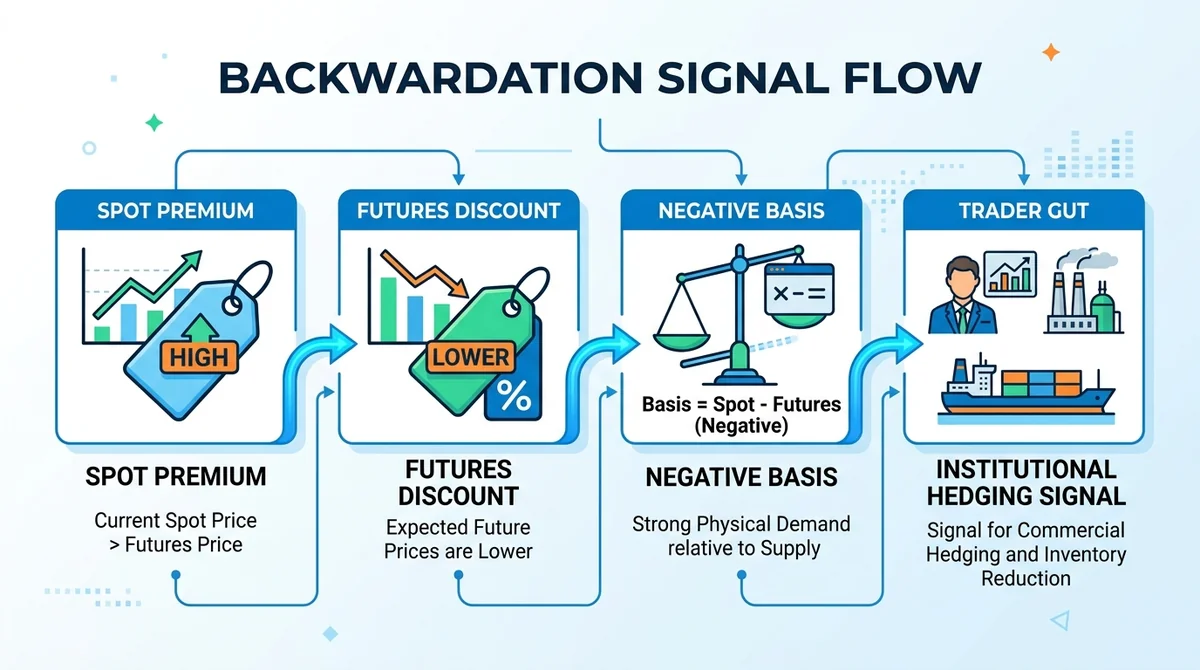
CME basis is the difference between the CME Bitcoin futures price and the spot Bitcoin price, i.e., basis = futures price - spot price. When the basis is positive, futures are in contango; when negative, futures are in backwardation (spot premium). Changes in the basis reflect market expectations for future prices and the balance of long and short forces in the futures market, but note that CME futures are cash-settled, contract months include the nearest two months and subsequent quarterly months, and the choice of spot price index may affect the basis.
#What key trends are emerging in Bitcoin ETF flows in 2026?
#Is institutional inflow share continuing to rise?
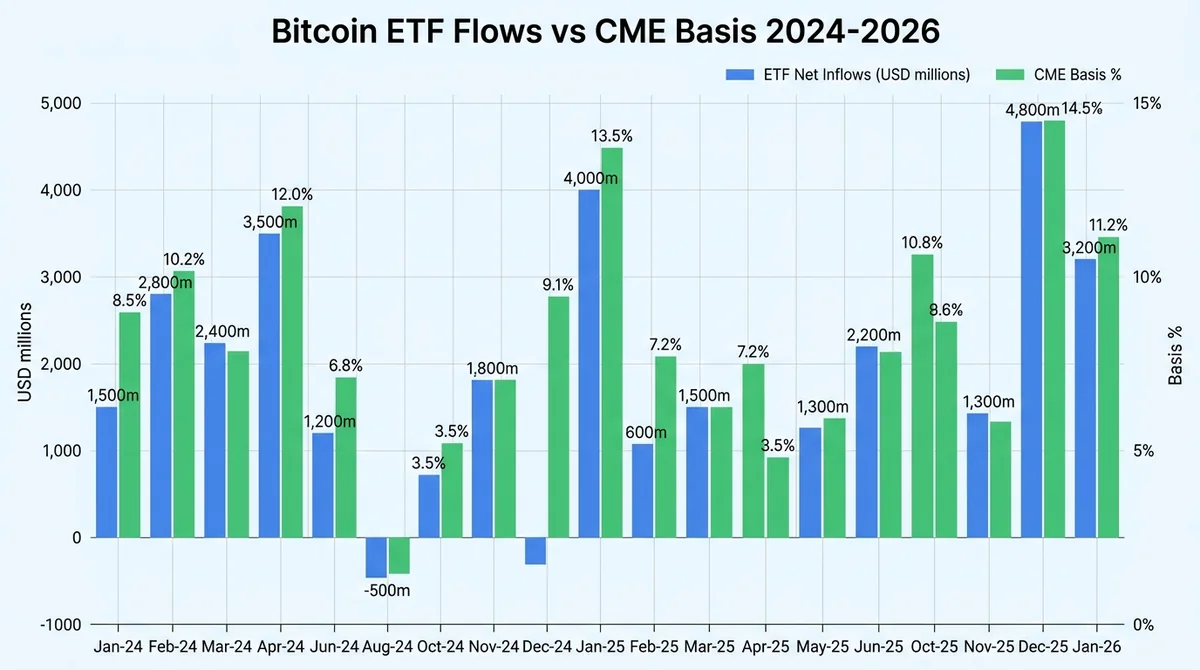
Institutional flows: According to public reports, U.S. spot Bitcoin ETFs have shown a net inflow trend from approval in January 2024 through 2026, with institutional holdings gradually increasing, but specific figures require checking the latest issuer data. The correlation between inflows and price trends has not been rigorously statistically tested and should not be viewed as a stable causal relationship.
Core drivers: Possible factors driving ETF flows include: macro liquidity expectations, clearer regulatory policies, institutional demand for diversified asset allocation, and supply-demand structural changes after the Bitcoin halving cycle. These factors need to be verified with real-time data.
#What events have driven sharp swings in fund flows?
Key events: Events that may trigger sharp short-term changes in fund flows include approvals of ETF-related derivatives, Federal Reserve rate decisions, and adjustments to digital asset custody rules in major jurisdictions. Historical data suggest that event-driven fund flows often coincide with synchronized basis movements, but this observation lacks specific event samples and statistical testing.
Key participants: Upstream includes Bitcoin miners and spot holders; midstream includes ETF issuers and market makers; downstream includes institutional investors, family offices, and individual investors allocating through retirement accounts. Market makers hedge spot positions through futures, which may directly affect the basis structure, but specific hedging sizes have not been verified.
#How does institutional hedging affect the CME basis?
#What are the common hedging strategies used by institutions?
Institutional hedging: When institutions hold Bitcoin spot or ETF long positions, they may establish short positions through CME futures to lock in prices and reduce downside risk. There are also calendar spread arbitrage, basis trading, and other strategies. The core of these strategies is to profit from or hedge against changes in the price spread between futures and spot.
#How does hedging change the basis structure?
Basis structure: In theory, heavy short hedging pushes down futures prices, causing the basis to narrow or turn into backwardation. Backwardation implies higher hedging costs and cautious market sentiment; contango suggests optimistic expectations for future prices, but excessively high contango may attract arbitrage capital. However, the basis is also affected by futures market liquidity, contract tenor, cash settlement expectations, and other factors, so it cannot be attributed solely to hedging behavior.
The table below summarizes key metrics and their signal significance:
| Metric | Definition | Current observation (as of Jan 2026) | Signal significance |
|---|---|---|---|
| Bitcoin spot ETF flows | Daily net inflow/outflow amount | Subject to issuer disclosure | Reflects institutional allocation demand |
| CME basis | Futures price - spot price | Check real-time quotes | Positive = contango, negative = backwardation |
| Backwardation / spot premium | Spot price above futures | Occurs when demand surges | Signal of short-term supply-demand imbalance |
| BTC total supply cap | 21 million | Protocol-fixed, cannot be increased | Scarcity support |
#What do backwardation signals mean for the market?
#What is the difference between backwardation and contango?
Backwardation (spot premium) refers to the spot price being higher than the futures price, i.e., a negative basis. This is the opposite of the more common contango and typically appears when spot market demand surges or short-term supply is tight. Contango refers to futures prices being higher than spot. Backwardation can also be caused by selling pressure in the futures market and does not necessarily indicate strong spot demand.
#How has the market performed after backwardation signals historically?
Backwardation signals: In market experience, backwardation sometimes accompanies short-term price spikes because spot buying is strong. However, the signal does not necessarily predict sustained gains and may reflect cautious pricing by futures market participants regarding short-term overheating. Historical samples may also show choppy or corrective moves. This study does not provide systematic backtesting, so no probabilistic conclusions can be drawn. It should be interpreted together with fund flows and basis changes.
#How can investors use these signals to optimize trading decisions?
#How can you build a monitoring framework for ETF flows and basis?
Monitoring framework: Consider recording daily spot ETF net inflows/outflows and CME basis to observe whether they move in the same direction. When funds continue to flow in but the basis does not widen or even turns negative (backwardation), it may indicate increased hedging pressure in the futures market or overheated spot demand; when funds flow out and the basis narrows, it may show long liquidation. MSX platform provides Bitcoin spot and contract trading, allowing users to monitor ETF flows and CME basis data on a single dashboard to aid decisions. This framework is only a research tool, not trading advice, and actual data may lag.
#What are the risks of signal-based trading strategies?
Risk management: All strategies based on fund flows and basis carry model failure risk, data lag risk, and black swan event risk. You must set strict stop-losses and understand that signals may produce false positives. This study does not provide any buy or sell recommendations.
Risks and disagreements: Bears argue that ETF fund flows may be dominated by short-term speculation, and institutional hedging may mask real demand; backwardation signals may also be distortions caused by insufficient futures market liquidity rather than healthy demand. In addition, regulatory policy changes may suddenly alter the fund flow structure.
#Conclusions and risk warnings of this study
#Summary of key findings
Research conclusion: Bitcoin ETF flows, CME basis, and backwardation signals may have mutually corroborating relationships. Institutional hedging behavior is an important transmission channel connecting spot demand and futures pricing. However, all signals must be interpreted in the macro and regulatory context and do not have independent predictive power. This study is based on public data, and its conclusions incorporate fundamental factors such as the 21 million total supply cap, pending validation with subsequent data.
#Study limitations and data notes
Risk warning: This study is based on public data, some of which is as of January 2026 and may change; changes in market structure may cause historical patterns to fail. This article does not constitute investment advice.
Data notes: This study uses publicly available data: Bitcoin's total supply cap from Bitcoin.org, CME contract specifications from CME Group, and ETF approval information from SEC announcements. For specific real-time fund flow and basis data, please refer to official disclosures.
What to watch next: Track daily ETF net inflows, CME basis changes, CME open interest, and position reports from major ETF issuers; monitor Federal Reserve policy and further SEC clarity on digital asset ETF rules; watch the duration of backwardation and the depth of futures discounts.
#Frequently Asked Questions (FAQ)
Q: What is the CME basis? A: CME basis = CME Bitcoin futures price - Bitcoin spot price. A positive value indicates contango; a negative value indicates backwardation (spot premium/futures discount). Basis changes reflect market expectations and hedging pressure, and are affected by cash settlement and index selection.
Q: How do Bitcoin ETF flows affect the market? A: Net ETF inflows represent increased allocation demand through regulated channels and provide support to spot prices, but flows and prices are not a simple causal relationship. They should be assessed together with the basis and macro environment, with specific data subject to issuer disclosures.
Q: What does a backwardation signal mean? A: Backwardation means the spot price is higher than the futures price, often occurring when spot demand surges or futures selling pressure increases. It may accompany short-term price spikes, but persistence depends on subsequent fund inflows and basis changes, without systematic backtesting support.
Q: How does institutional hedging affect the basis? A: When institutions hold spot long positions, they typically sell CME futures to hedge downside risk. Since each CME Bitcoin futures contract represents 5 BTC, large-scale hedging directly depresses futures prices, causing the basis to narrow or turn negative, but the basis is also affected by other factors.
Q: How should investors monitor these signals? A: You can track ETF net inflows and CME basis daily and watch for divergences, such as inflows while the basis does not widen or turns negative. You can use the MSX dashboard to view relevant data in one place, but all signals must be used within a risk management framework and do not constitute trading advice.
Q: When were spot Bitcoin ETFs approved? A: The U.S. SEC approved the first 11 spot Bitcoin ETFs on January 10, 2024, opening compliant institutional investment channels. Inflows have since grown and have become an important market participant.
Q: What are the CME Bitcoin futures contract specifications? A: Each CME Bitcoin futures contract represents 5 BTC and is cash-settled. Contract months include the nearest two months and subsequent quarterly months. This specification provides a standardized tool for institutional hedging.
FAQ
What is the CME basis?
CME basis = CME Bitcoin futures price - Bitcoin spot price. A positive value indicates contango; a negative value indicates backwardation (spot premium/futures discount). Basis changes reflect market expectations and hedging pressure, and are affected by cash settlement and index selection.
How do Bitcoin ETF flows affect the market?
Net ETF inflows represent increased allocation demand through regulated channels and provide support to spot prices, but flows and prices are not a simple causal relationship. They should be assessed together with the basis and macro environment, with specific data subject to issuer disclosures.
What does a backwardation signal mean?
Backwardation means the spot price is higher than the futures price, often occurring when spot demand surges or futures selling pressure increases. It may accompany short-term price spikes, but persistence depends on subsequent fund inflows and basis changes, without systematic backtesting support.
How does institutional hedging affect the basis?
When institutions hold spot long positions, they typically sell CME futures to hedge downside risk. Since each CME Bitcoin futures contract represents 5 BTC, large-scale hedging directly depresses futures prices, causing the basis to narrow or turn negative, but the basis is also affected by other factors.
How should investors monitor these signals?
You can track ETF net inflows and CME basis daily and watch for divergences, such as inflows while the basis does not widen or turns negative. You can use the MSX dashboard to view relevant data in one place, but all signals must be used within a risk management framework and do not constitute trading advice.
Related Terms
Ready to try? Test the strategy on MSX with small positions. Educational content only — not investment advice.