Research on Cash Flow Distribution and Liquidity Discount Mechanisms of Real Estate RWA: Property Fractionalization, Rent Distribution, and Redemption Restrictions
Real estate RWA: fractional ownership, smart contract cash flow, and liquidity discounts from redemption limits and thin markets vs tokenized Treasuries.
⚠ This article is a multi-asset digital asset research piece and does not constitute investment advice. Investing involves risk; please exercise prudent judgment.
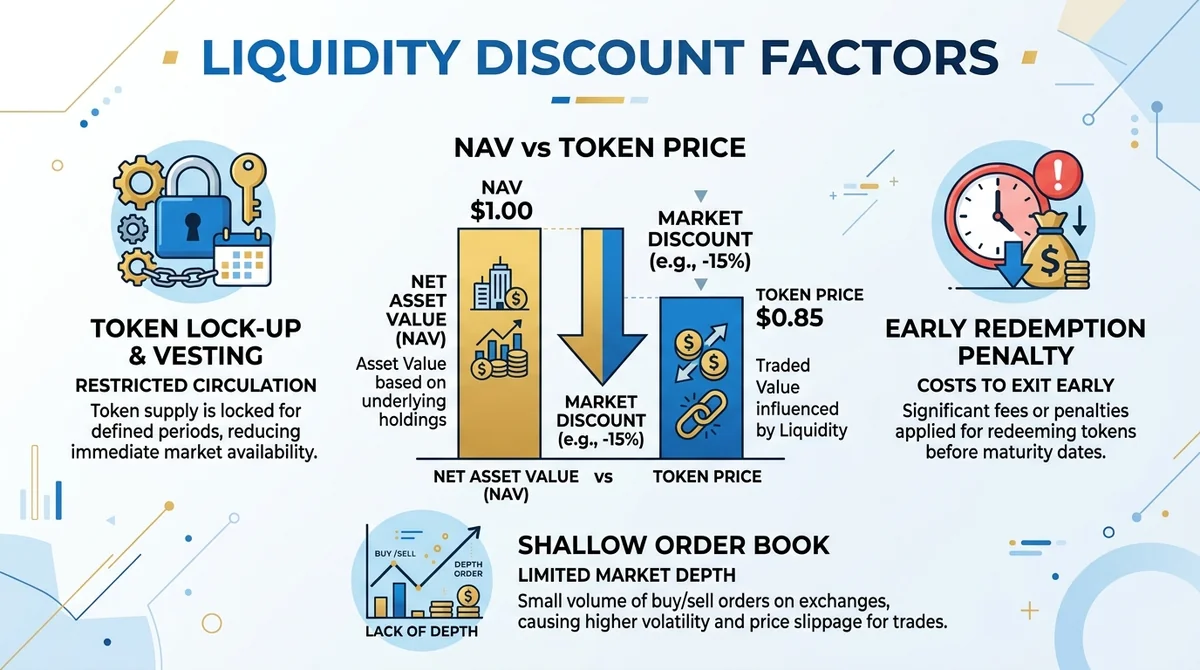
Cash flow distribution for real estate RWAs typically relies on smart contracts to automatically execute based on holding ratios, but specific implementations vary. Liquidity discounts mainly stem from redemption restrictions and insufficient secondary market depth, and token prices may be significantly below their net asset value.
Core conclusion: Real estate RWAs achieve automated distribution of cash flows such as rent through property fractionalization and smart contracts, but liquidity discounts caused by redemption restrictions and insufficient secondary market liquidity are risks that investors need to evaluate carefully. There is currently no unified public data, and the magnitude of discounts must be assessed on a case-by-case basis.
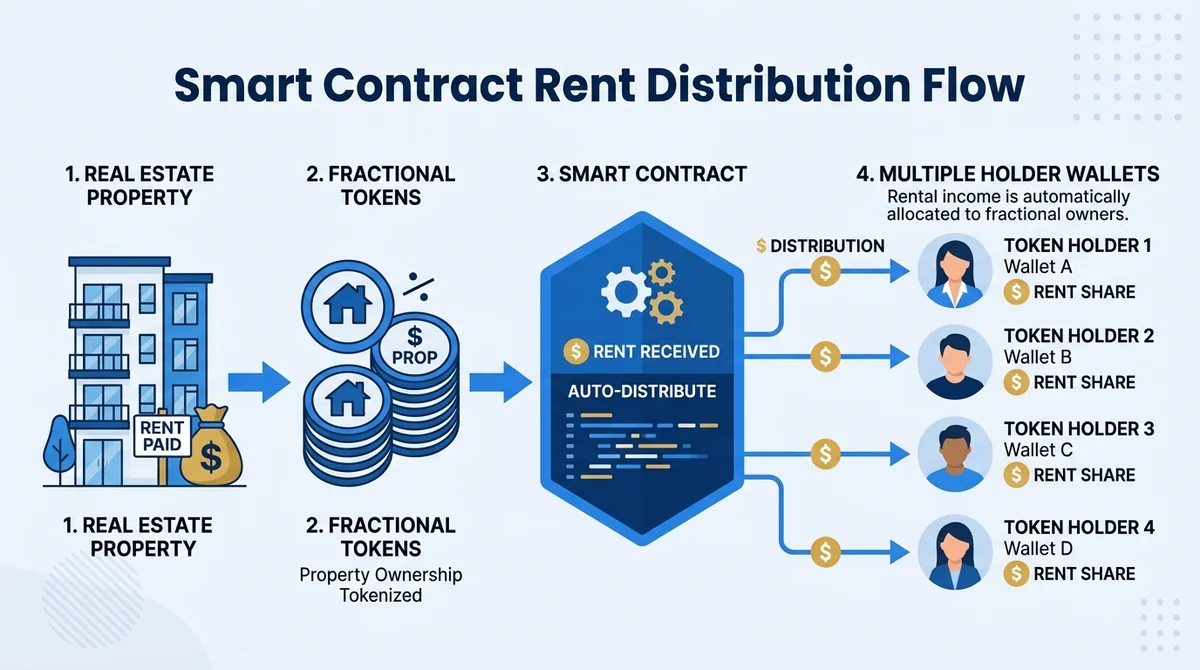
Underlying/business line definition: Real estate RWA refers to the splitting of real property ownership or income rights into tradable tokens, with token holders receiving cash flows such as rent proportionally. The research scope covers property fractionalization, tokenized issuance, cash flow distribution, secondary market trading, and redemption mechanisms, falling under the category of real-world asset tokenization (RWA).
Key mechanisms and data: For cash flow distribution, smart contracts automatically distribute rental income according to token holding ratios, with distribution transparency and contract audits being key. For liquidity discounts, redemption restrictions (such as lock-up periods and early redemption penalties) limit holders' ability to exit, while insufficient secondary market trading depth further depresses prices, potentially causing token prices to be below net asset value. The specific discount magnitude varies by project, there is a lack of unified public data, and investors need to assess on a case-by-case basis.
Key drivers:
- Evolving regulatory frameworks: Some jurisdictions are exploring enhanced disclosure requirements, introducing third-party custody and audits, which may reduce information asymmetry and improve liquidity discounts, but specific policy implementation remains to be seen (see 2026 RWA Policy Weekly Update).
- Demonstration effect of standardized assets like tokenized Treasuries: these assets are generally considered to have high liquidity and standardization, with smaller liquidity discounts; their redemption mechanisms and market depth provide references for real estate RWAs, but there are significant differences among projects (see Tokenized Treasury Liquidity Risk Study).
- On-chain automated distribution may reduce operating costs and improve cash flow distribution efficiency.
Key participants: Real estate asset owners, tokenization issuance platforms, smart contract audit firms, third-party custodians, market makers, and secondary market investors. Representative targets require project-specific research; this article makes no recommendations.
Risks and disagreements:
- Liquidity risk: Redemption restrictions and insufficient secondary market depth make exits difficult, and discounts may persist over the long term.
- Regulatory uncertainty: Tokenization regulatory requirements vary greatly across jurisdictions, and compliance costs may affect project liquidity (see RWA Policy Landscape).
- Cash flow stability risk: Rental income is affected by vacancy rates, tenant defaults, property maintenance, etc., and distributions may fluctuate.
- Smart contract and custody risk: Contract vulnerabilities, oracle failures, or custody issues may cause distribution delays or losses.
What to watch next: Details of new regulatory implementation, improvements in secondary market market-making mechanisms, progress in standardizing disclosures for real estate RWA projects, and the migration of tokenized Treasury liquidity mechanisms to the real estate sector.
FAQ:
FAQ
What is the cash flow distribution mechanism for real estate RWA?
Real property ownership is split into tokens, and rental income is automatically distributed to holders according to holding ratios via smart contracts, but actual projects may vary.
How does the liquidity discount form?
Redemption restrictions and insufficient secondary market depth together cause token prices to be below net asset value; information asymmetry and asset heterogeneity may also amplify the discount.
What are the similarities and differences between tokenized Treasuries and real estate RWA?
Treasuries are typically highly standardized and liquid with relatively small discounts; real estate RWAs have high asset heterogeneity and low trading depth, so discounts may be larger, but some liquidity mechanisms can be borrowed.
How should investors assess the liquidity risk of real estate RWAs?
Pay attention to rent coverage ratios, vacancy rates, redemption terms, and secondary market depth; diversify investments to reduce risk.
What impact do new regulations have on real estate RWAs?
They may increase disclosure requirements, introduce third-party custody and audits, reduce information asymmetry, but also increase compliance costs.
Related Terms
Ready to try? Test the strategy on MSX with small positions. Educational content only — not investment advice.