Tokenized Issuance Supply Cycles and the Leading Relationship of Regulatory Licenses: A Study of Project Filing, Approval, and On-Chain Deployment Time Lags (2026)
Tokenized Issuance Supply Cycles and License Lead: Filing, Approval, On-Chain Deployment Lags, Data Disclosure, Cross-Jurisdiction Differences.
#Tokenized Issuance Supply Cycles and the Leading Relationship of Regulatory Licenses: A Study of Project Filing, Approval, and On-Chain Deployment Time Lags (2026)
⚠ This article is a digital asset multi-asset research piece and does not constitute investment advice. Investing involves risk; please make decisions prudently.
Regulatory license approvals tend to serve as a leading indicator for tokenized issuance supply, but the time lags between filing, approval, and on-chain deployment lack unified public data, requiring more cautious cross-jurisdictional tracking.
#Core Conclusion
Core Conclusion: There may be a leading relationship between the pace of regulatory license approvals and tokenized issuance supply, but this relationship has not been fully validated, and lag measurements remain limited by data disclosure constraints.
#Target / Business Line Definition
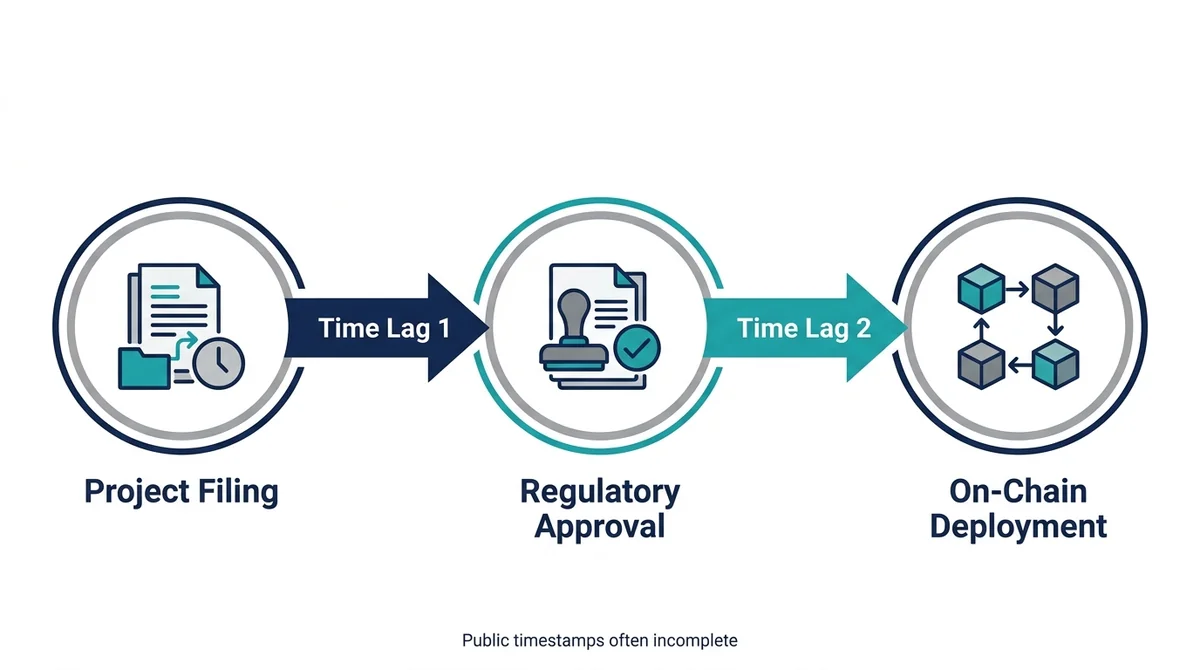
The subject of this study is the supply cycle of tokenized issuance (including RWA and tokenized stocks/stock tokens), specifically focusing on the full time lag from project filing to regulatory approval, and then to on-chain contract deployment. Tokenized Stock is defined as a digital asset representing price exposure to a specific stock; trading the token does not represent holding the actual stock and typically carries no dividends or voting rights. This definition is based on common industry descriptions, and specific legal definitions must be verified per jurisdiction.
#Key Mechanisms and Data
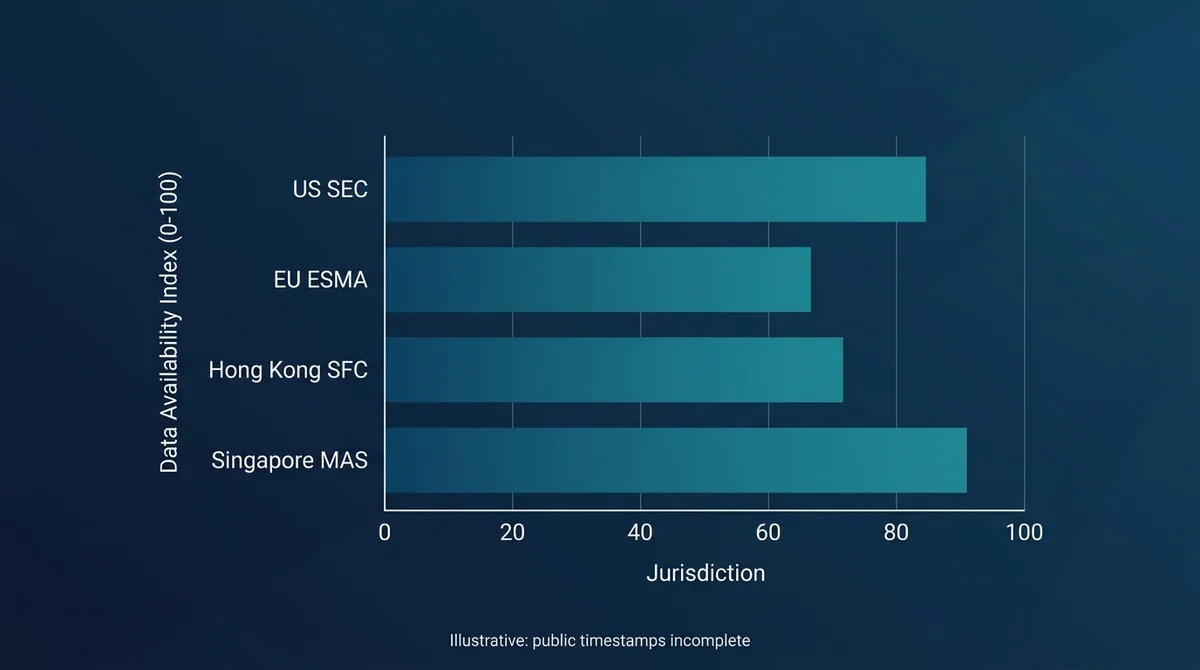
License as a Supply Precondition: Most jurisdictions typically require security token offerings to obtain corresponding licenses or exemptions, and the pace of license approval may directly affect the release rhythm of supply; however, the specific degree of impact has not been fully verified by public data. Filing-to-Approval Time Gap: Project filing records, approval announcements, and on-chain deployment transaction hashes together form the lag chain, but these timestamp data points are not uniformly disclosed in most jurisdictions, making it difficult to calculate a robust median. Policy Window Opening and Tightening: Policy windows vary significantly across jurisdictions, and RWA regulation and stock token license requirements may affect issuance supply cycles, but quantitative evidence is lacking. The conclusions in this section are based on publicly disclosed information as of 2026-02; however, most jurisdictions do not systematically disclose all timestamps.
#Core Driving Forces
Regulatory Policy Window: The pace of license issuance in major jurisdictions is the primary constraint on supply. Filing-to-Approval Time Gap: Approval speed determines the length of the supply release lag. On-chain Deployment Activity: Whether approved projects are deployed in a timely manner reflects market confidence and infrastructure maturity. Market Demand: Acceptance of tokenized assets affects the willingness to advance projects.
#Key Participants
Regulators: U.S. SEC, EU ESMA, Hong Kong SFC, Singapore MAS, etc., with differing frameworks. Issuers and Platforms: Licensed exchanges, tokenization platforms, RWA projects, etc., responsible for project filing and deployment. Infrastructure Providers: On-chain contract deployment, custody, and compliance technology providers, supporting compliant tokenized issuance.
#Risks and Divergences
Data Opacity: Incomplete disclosure of filing, approval, and deployment timestamps leads to errors in lag measurements. Regulatory Divergence: Different jurisdictions define "approval" differently, complicating cross-jurisdictional comparisons. Unstable Leading Relationship: Market factors (such as liquidity and price fluctuations) may interfere with the supply rhythm; licenses are not the only variable, and directional evidence is insufficient. Counterexamples Exist: Some projects may deploy first through exemptions or unlicensed pathways, causing deviations from the leading relationship.
#What to Watch Next
Regulatory Decision Points: Annual plans and license issuance announcements from major jurisdictional regulators. On-chain Deployment Monitoring: Observing the average delay from project approval to contract deployment to refine lag estimates. Data Disclosure Improvements: Whether the industry promotes unified disclosure standards for filing, approval, and deployment.
#FAQ
Question 1: Is a regulatory license an absolute precondition for tokenized issuance? Not absolutely. Some jurisdictions or products have exemption or unlicensed pathways, but license approval is usually one of the main supply constraints under compliant issuance routes. This conclusion is based on general observation and lacks systematic data validation.
Question 2: How to quantify the filing-to-approval lag? It depends on filing records and approval announcements in each jurisdiction, but current public data is insufficient to calculate a robust median; only case-by-case inferences can be made.
Question 3: What is the difference between tokenized stocks and traditional stocks? Tokenized stocks are only price exposure, not real equity, and typically have no dividends or voting rights; traditional stocks correspond to actual ownership. This definition is based on common industry descriptions, and specific legal definitions must be verified per jurisdiction.
Question 4: Which jurisdictions are making faster progress in RWA regulation? As of 2026-02, public information shows that the EU MiCA, Hong Kong, and Singapore have frameworks in progress, while the U.S. is in a state of multiple agencies operating in parallel; specifics need to be checked case by case.
Question 5: What is the biggest risk in studying this topic? Data opacity and inconsistent regulatory definitions limit the extrapolation of conclusions, and the leading relationship may be interfered with by market factors.
FAQ
Is a regulatory license an absolute precondition for tokenized issuance?
Not absolutely. Some jurisdictions or products have exemption or unlicensed pathways, but license approval is usually one of the main supply constraints under compliant issuance routes. This conclusion is based on general observation and lacks systematic data validation.
How to quantify the filing-to-approval lag?
It depends on filing records and approval announcements in each jurisdiction, but current public data is insufficient to calculate a robust median; only case-by-case inferences can be made.
What is the difference between tokenized stocks and traditional stocks?
Tokenized stocks are only price exposure, not real equity, and typically have no dividends or voting rights; traditional stocks correspond to actual ownership. This definition is based on common industry descriptions, and specific legal definitions must be verified per jurisdiction.
Which jurisdictions are making faster progress in RWA regulation?
As of 2026-02, public information shows that the EU MiCA, Hong Kong, and Singapore have frameworks in progress, while the U.S. is in a state of multiple agencies operating in parallel; specifics need to be checked case by case.
What is the biggest risk in studying this topic?
Data opacity and inconsistent regulatory definitions limit the extrapolation of conclusions, and the leading relationship may be interfered with by market factors.
Related Terms
Ready to try? Test the strategy on MSX with small positions. Educational content only — not investment advice.