Tokenized Securities On-Chain Compliance and RegTech: Wallet Whitelisting, Contract-Level Transfer Controls, and On-Chain Monitoring
Tokenized securities compliance via wallet whitelists, contract-level transfer controls, and on-chain monitoring. Not investment advice.
⚠ This article is a digital asset multi-asset research piece and does not constitute investment advice. Investing involves risk; please make decisions prudently.
#Key Takeaways
The core of on-chain compliance for tokenized securities is turning securities-law requirements for accredited investors and transfer restrictions into auditable automated rules through wallet whitelists, contract-level transfer controls, and on-chain monitoring; however, centralization, code vulnerabilities, and divergent regulatory recognition remain key risks.
#Asset/Business Line Definitions
The research scope covers three asset types: tokenized securities, tokenized stocks, and tokenized stock perpetuals. The boundary depends on whether they carry real securities entitlements.
- Tokenized securities: May be issued based on real securities and carry entitlements such as dividends and voting rights, subject to the issuance disclosures.
- Tokenized stocks: Usually represent price exposure only; trading the token does not mean holding the real stock, and they generally carry no dividends or voting rights.
- Tokenized stock perpetuals: These are derivatives that track stock prices in the form of perpetual contracts and are further removed from real stock entitlements.
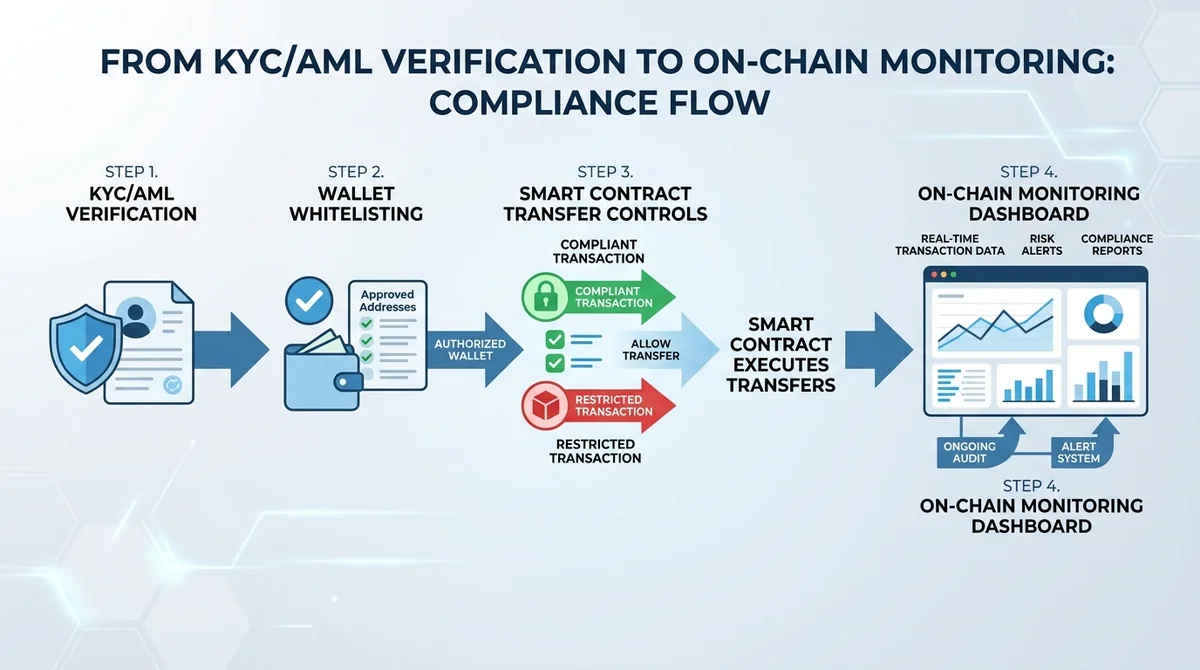
The core problem on-chain compliance must solve is to implement traditional securities-law requirements for accredited investors and transfer restrictions as enforceable, auditable automated controls on the blockchain, while managing the conflict between transparency and privacy. For related definitions, see Security token offering - Wikipedia.
#Key Mechanisms and Data
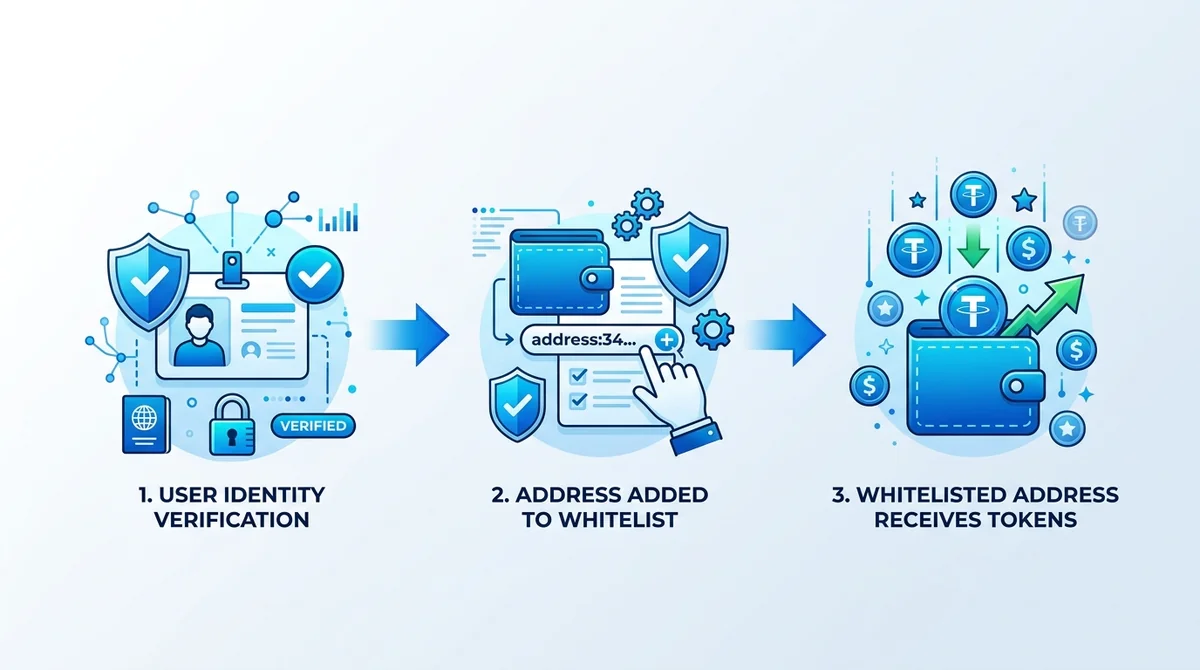
Wallet whitelisting: As the foundational compliance layer, addresses that pass KYC/AML verification are added to a whitelist to restrict holder eligibility. Whitelist update mechanisms are usually managed by the issuer or a compliance service provider, and there is no uniform standard for update frequency; however, whitelists alone cannot automatically enforce transfer restrictions, and their update mechanism carries centralization risk.
Contract-level transfer controls: Smart contract code automatically enforces lock-up periods, holding caps, accredited investor checks, and other rules, making them the key to mandatory compliance; however, code vulnerabilities could cause compliance failures, requiring rigorous audits and upgrade mechanisms.
On-chain monitoring: Tracks token transfers, holder changes, and compliance events to provide real-time data for regulatory technology (RegTech); regulators still disagree on the legal validity of on-chain evidence, and acceptance varies by jurisdiction. Because publicly disclosed data on on-chain compliance adoption rates and specific parameters are limited and vary widely across projects, this article does not provide specific figures; any particular project's whitelist address count, lock-up days, etc. should be based on its issuance disclosures.
#Core Drivers
- Regulatory clarity: Some jurisdictions have introduced or are advancing security token regulatory frameworks, driving demand for compliance infrastructure, but global standards are far from unified.
- Institutional capital entry: Traditional financial institutions need compliant custody, auditing, and transfer controls before they can participate in tokenized securities.
- Technological auditability: The immutability of blockchain makes on-chain compliance records easier to audit, which may lower compliance costs over the long term, but data privacy and cross-chain interoperability issues must be addressed.
- Risk control: Avoid legal and reputational risks arising from non-compliant issuance and transfers.
#Key Participants
- Issuers: Entities that tokenize securities and are responsible for initial compliance design.
- KYC/AML service providers: Provide whitelist address verification.
- Smart contract audit firms: Audit transfer control code and issue security reports.
- Custody and compliance service providers: Manage whitelist updates, on-chain monitoring, and event indexing.
- Secondary market platforms: Execute trades and integrate compliance modules to restrict non-whitelisted addresses.
- Regulators: Set rules and gradually recognize on-chain compliance evidence.
#Risks and Divergences
- Whitelist centralization risk: The update mechanism may be manipulated, delayed, or erroneous, leading to non-compliant holdings.
- Code vulnerabilities: Contract-level transfer controls may be bypassed due to bugs, allowing non-compliant addresses to acquire tokens or hold more than allowed.
- Privacy vs. transparency conflict: Public on-chain data may expose holder identities or positions, conflicting with data protection regulations.
- Divergent regulatory recognition: Different jurisdictions have varying attitudes toward the legal validity of on-chain evidence, increasing cross-jurisdictional compliance costs.
- Product confusion risk: Price exposure products such as tokenized stocks may mislead investors into believing they hold real entitlements.
FAQ
钱包白名单能否完全防止违规持有?
不能。白名单只限制初始持有资格,但无法自动阻止已列入白名单的地址进行后续违规转让;需合约级转让控制配合。
代币化证券与代币化股票有什么区别?
代币化证券可能基于真实证券并附带权益,具体取决于发行结构;代币化股票通常只是价格敞口,不持有真实股票,无分红和投票权。
合约代码漏洞会带来哪些合规风险?
漏洞可能导致转让限制被绕过,使不合规地址获得代币或超额持有,违反证券法,并引发法律责任。
监管机构如何认可链上合规证据?
目前认可度因司法辖区而异,部分辖区接受链上记录作为审计辅助,但尚未形成统一标准;需关注最新监管指引。
链上监控主要监控哪些指标?
代币转移事件、持有者地址变化、白名单状态、锁定到期时间、大额转账与异常模式等。
Related Terms
Ready to try? Test the strategy on MSX with small positions. Educational content only — not investment advice.