Tokenized U.S. Treasuries Liquidity Risk: Redemption Mechanisms, On-Chain Depth, and Extreme Market Stress Tests
Tokenized U.S. Treasuries liquidity risk: redemption mismatches, thin on-chain depth, and market-maker exits can trigger depegs and liquidity spirals.
Tokenized U.S. Treasuries Liquidity Risk: Redemption Mechanisms, On-Chain Depth, and Extreme Market Stress Tests
⚠ This article is digital asset multi-asset research and does not constitute investment advice. Investment involves risk; please make decisions prudently.
Tokenized U.S. Treasuries' liquidity risk mainly stems from maturity mismatches in redemption mechanisms, insufficient on-chain liquidity depth, and market-maker exits in extreme markets. These three factors reinforce each other and may form a liquidity spiral of redemption runs, surging slippage, and collateral haircuts. This assessment is based on general market structure analysis; specific risks vary by product terms and on-chain environment.
#Core Conclusion
Core Conclusion: As of January 2026, the liquidity risk of tokenized U.S. Treasuries does not come from the underlying Treasury bonds themselves (U.S. Treasuries typically have the deepest and most liquid secondary market globally), but from the structural mismatch of mapping low-liquidity term assets into highly liquid tokens. Redemption restrictions, on-chain depth, and market-maker behavior jointly determine their stability.
#Asset/Business Line Definition
Research Subject: Tokenized U.S. Treasuries are digital assets that tokenize U.S. Treasury bonds or Treasury fund shares, falling within the RWA (real-world assets) category. They give on-chain investors exposure to short-term Treasury yields, but the token itself is not equivalent to directly holding the underlying Treasury bonds. Investors actually face dual constraints: the issuer's redemption commitment and secondary market liquidity.
#Key Mechanisms and Data
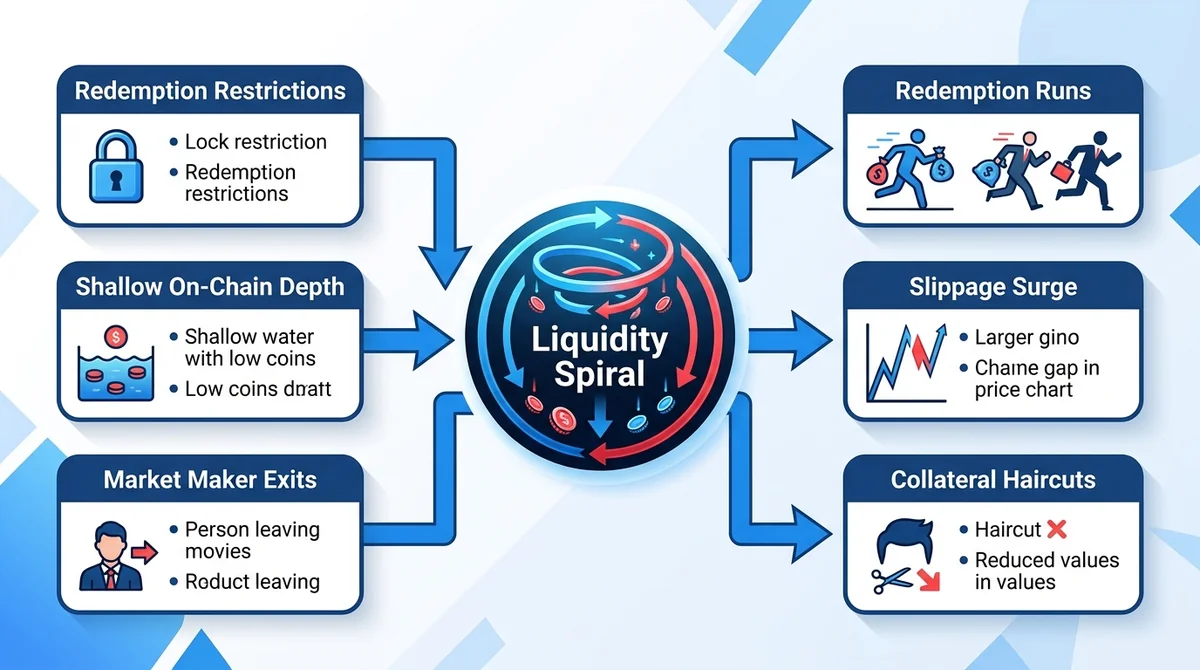
Redemption Mechanism: Some tokenized U.S. Treasury products set a redemption notice period in their issuance terms (commonly 24 hours to 7 days), single-day or single-redemption limits, and reserve the right to suspend redemptions when underlying asset liquidity is insufficient (specific terms vary by product and must be verified individually). Suspension of redemptions and queue mechanisms can easily trigger discounted selling in the secondary market. On-Chain Depth: Tokenized U.S. Treasuries may have limited liquidity pool depth on DEXs, and market makers may provide insufficient quote depth. Large trades can cause significantly higher slippage; market makers may pull quotes when volatility increases, further widening bid-ask spreads. Stress Scenario: A sharp rise in interest rates will cause underlying bond prices to fall (duration risk). If this is combined with a stablecoin depeg triggering a redemption wave, the token price may fall significantly below net asset value, and arbitrage mechanisms may fail because redemptions are restricted.
The above key mechanisms and data are as of January 2026 and do not constitute guarantees of future performance; specific terms are subject to each product's offering documents. U.S. Treasury market depth data can refer to the U.S. Treasury (https://www.treasurydirect.gov/).
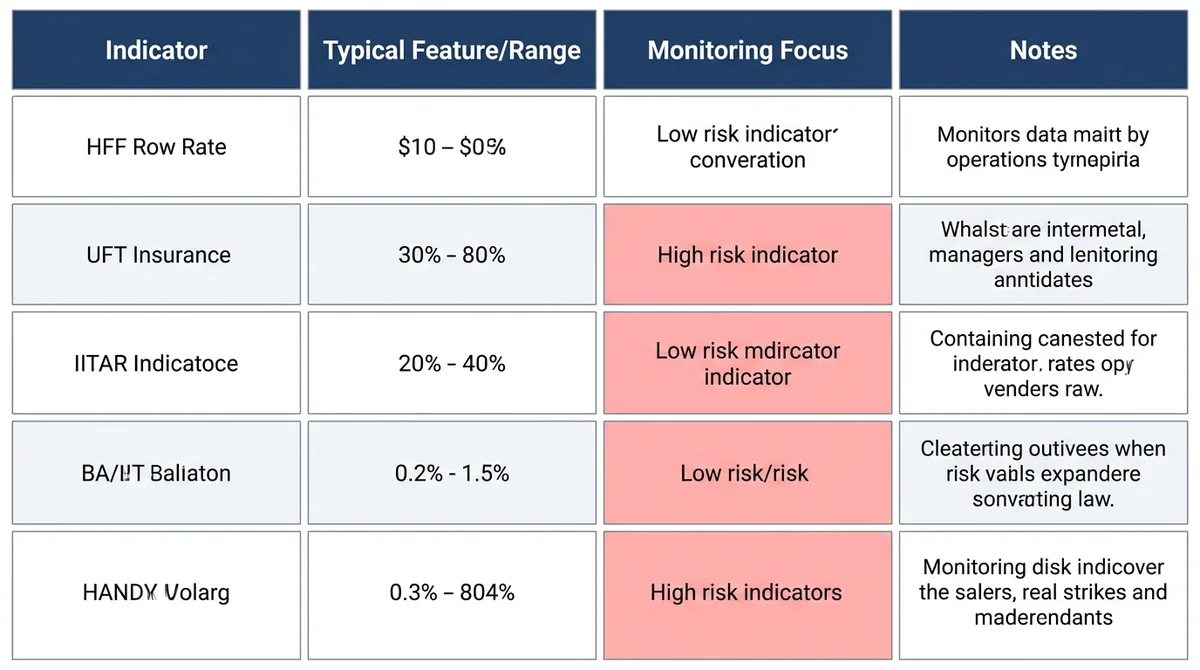
#Major Liquidity Risk Indicators for Tokenized U.S. Treasuries (2026)
| Indicator | Typical Feature/Range | Monitoring Focus | Notes |
|---|---|---|---|
| Redemption notice period | 24 hours to 7 days | Product offering documents | Longer notice period means lower exit flexibility |
| Single-day redemption limit | Varies by product (commonly 10%–30% of net assets) | Queue mechanism after limit triggered | Lower limit means higher run risk |
| Underlying asset duration | Mostly short-term (0–3 months) | Federal Reserve interest rate policy | Longer duration means greater interest rate risk |
| On-chain liquidity pool depth | May be less than $1 million | DEX pool size and market maker quotes | Insufficient depth leads to high slippage |
| Bid-ask spread | May widen to several percentage points in extreme markets | Market maker quote withdrawal behavior | Widening spreads amplify losses |
(Note: Data in the table are common market ranges, not exact statistics; refer to each product's disclosures for specifics.)
#Core Drivers
Driver 1: Demand for tokenized U.S. Treasuries comes from yield needs of idle on-chain stablecoins and relatively high barriers to traditional Treasury accounts. Driver 2: Issuers' design of underlying asset liquidity and redemption terms directly determines risk exposure. Driver 3: Market makers' willingness to participate in on-chain DEXs is affected by market volatility and on-chain gas costs; they may collectively exit in extreme markets.
#Key Participants
Issuers/Platforms: Provide tokenized U.S. Treasury products and are responsible for underlying asset custody and redemption execution. Market Makers: Provide two-sided quotes for tokens, influencing secondary market depth and spreads. On-Chain Investors: Include DeFi protocols, stablecoin treasuries, and individual users, using tokenized U.S. Treasuries as yield-bearing or collateral assets. Underlying Asset Custodians: Hold actual U.S. Treasury bonds or money market fund shares, determining asset liquidation ability during redemptions. For regulatory compliance, refer to SEC guidance (https://www.sec.gov/).
#Risks and Divergences
Bear View: Tokenized U.S. Treasuries have a liquidity illusion—while they appear redeemable at any time in normal conditions, redemption limits and suspension mechanisms can cut off exit channels in extreme markets, with price declines and redemption restrictions reinforcing each other. Key Divergence: Some participants believe tokenized U.S. Treasuries are more transparent than stablecoins, but critics point out they still rely on centralized issuers and on-chain depth is insufficient to support large-scale liquidations. Additional Risk: When used as collateral, if the token price depegs, it may trigger liquidation cascades in DeFi protocols. According to MSX platform observations, this risk deserves particular attention in the current market environment.
#What to Watch Next
Tracking Indicators: Redemption notice periods, single-day limits, underlying asset duration, on-chain liquidity pool depth, and bid-ask spreads of major products. Events: Interest rate policy changes, stablecoin depeg events, and redemption suspension announcements from major tokenized U.S. Treasury platforms.
#FAQ
Q1: What is the difference between tokenized U.S. Treasuries and directly holding U.S. Treasury bonds? A: Tokenized U.S. Treasuries are tokens representing yield rights or shares promised by the issuer. Investors do not directly hold Treasury bonds and face issuer credit and redemption term risks; directly holding Treasury bonds does not have such intermediary risk (but still has interest rate risk).
Q2: Why is on-chain liquidity depth important for tokenized U.S. Treasuries? A: Insufficient depth means large sell orders can significantly depress prices. Especially when investors turn to secondary market selling because redemptions are restricted, high slippage amplifies losses and affects their valuation as collateral.
Q3: Can tokenized U.S. Treasuries depeg in extreme markets? A: Yes. When underlying asset liquidity is tight and issuers suspend or restrict redemptions, secondary market prices may fall below net asset value, and arbitrage mechanisms are difficult to repair due to redemption restrictions. The depeg may persist for some time.
Q4: How can investors reduce the liquidity risk of tokenized U.S. Treasuries? A: Pay attention to redemption notice periods, limits, and underlying asset liquidity; avoid concentrating holdings in a single product; set liquidity buffers; and treat tokenized U.S. Treasuries as liquidity-constrained assets rather than cash equivalents. Also pay attention to diversification risks across products and chains.
Q5: Are tokenized U.S. Treasuries suitable as cash equivalents? A: No. Although the underlying assets are short-term U.S. Treasuries, redemption restrictions and secondary market discount risks exist, and liquidity is lower than cash. They cannot be considered cash equivalents; they should be allocated as liquidity-constrained yield-bearing assets.
Q6: How should one evaluate the redemption terms of tokenized U.S. Treasuries? A: Focus on the redemption notice period, single-day limits, suspension conditions, and underlying asset liquidation mechanisms. Shorter notice periods, higher limits, and looser suspension conditions indicate lower liquidity risk.
FAQ
What is the difference between tokenized U.S. Treasuries and directly holding U.S. Treasury bonds?
Tokenized U.S. Treasuries are tokens representing yield rights or shares promised by the issuer. Investors do not directly hold Treasury bonds and face issuer credit and redemption term risks; directly holding Treasury bonds does not have such intermediary risk (but still has interest rate risk).
Why is on-chain liquidity depth important for tokenized U.S. Treasuries?
Insufficient depth means large sell orders can significantly depress prices. Especially when investors turn to secondary market selling because redemptions are restricted, high slippage amplifies losses and affects their valuation as collateral.
Can tokenized U.S. Treasuries depeg in extreme markets?
Yes. When underlying asset liquidity is tight and issuers suspend or restrict redemptions, secondary market prices may fall below net asset value, and arbitrage mechanisms are difficult to repair due to redemption restrictions. The depeg may persist for some time.
How can investors reduce the liquidity risk of tokenized U.S. Treasuries?
Pay attention to redemption notice periods, limits, and underlying asset liquidity; avoid concentrating holdings in a single product; set liquidity buffers; and treat tokenized U.S. Treasuries as liquidity-constrained assets rather than cash equivalents. Also pay attention to diversification risks across products and chains.
Ready to try? Test the strategy on MSX with small positions. Educational content only — not investment advice.