Multi-Asset Transmission Mechanism in the Fed Rate-Cut Cycle: Rate Path, Risk Asset Rotation, and Tokenized Asset Sensitivity
In-depth analysis of Fed rate cuts on risk asset rotation, Treasury RWA yields, tokenized stock valuation, and risks and indicators for tokenized assets.
⚠ This article is a multi-asset digital asset research piece and does not constitute investment advice. Investing involves risk; please make decisions prudently.
Fed rate cuts reduce the risk-free rate and boost risk appetite, typically driving capital from bonds to risk assets like equities. However, when transmitted to tokenized assets news, Treasury RWA yields fall with Treasury rates, tokenized stock valuation follows the underlying equities, and liquidity premium may amplify volatility. This article is based on public market data and general financial principles, without reference to specific platforms or products. Specific figures and conclusions should be verified against the latest market data.
#How Do Fed Rate Cuts Affect Risk Asset Rotation?
#How Do Rate Cuts Differentially Impact the Relative Attractiveness of Stocks and Bonds?
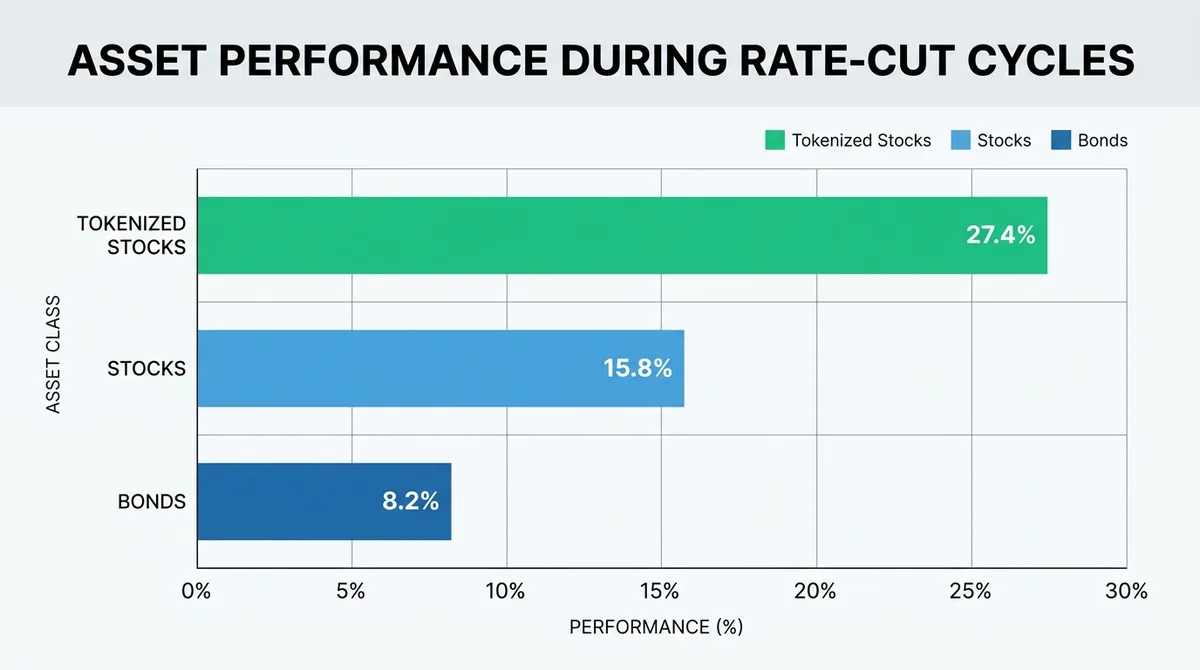
A decline in the risk-free rate reduces the discount rate for future cash flows, supporting equity valuation. Bond prices move inversely to rates, so rate cuts directly benefit existing bonds. However, the relative attractiveness of stocks versus bonds also depends on economic fundamentals: if rate cuts are accompanied by recession fears, capital may still favor bonds; if rate cuts are interpreted as a "soft landing" signal, rising risk appetite may shift funds from defensive assets to growth assets. These are general conclusions from traditional finance theory; specific market reactions depend on the prevailing economic environment.
#Which Risk Assets Typically Perform Better During Rate-Cut Cycles?
Historically, growth stocks (e.g., tech) and high-beta assets may outperform in the early stages of rate cuts because their valuations are more sensitive to the discount rate. But if the economy weakens, defensive sectors and high-quality bonds may regain favor. Tokenized stocks, as digital assets providing exposure to U.S. equity prices, are highly correlated with the underlying stocks but may experience additional volatility due to liquidity premium. Note that past performance does not guarantee future results, and the tokenized assets news market has a short history with limited data on full rate-cut cycles.
#How Sensitive Are Tokenized Assets to Fed Rate Cuts?
#How Do Treasury RWA Yields Change with Rate Cuts?
Treasury RWA yields are anchored to underlying Treasury rates, so rate cuts directly reduce coupon rates on newly issued products. However, prices of already-issued tokenized bonds rise as rates fall, and total return depends on duration. Short-term Treasury bill RWAs are less sensitive to rate changes, while medium- and long-term Treasury RWAs carry higher duration risk. These mechanisms are consistent with traditional bonds, but tokenized assets news may amplify price swings due to liquidity premium.
#How Is Tokenized Stock Valuation Calculated? How Do Rate Cuts Transmit?
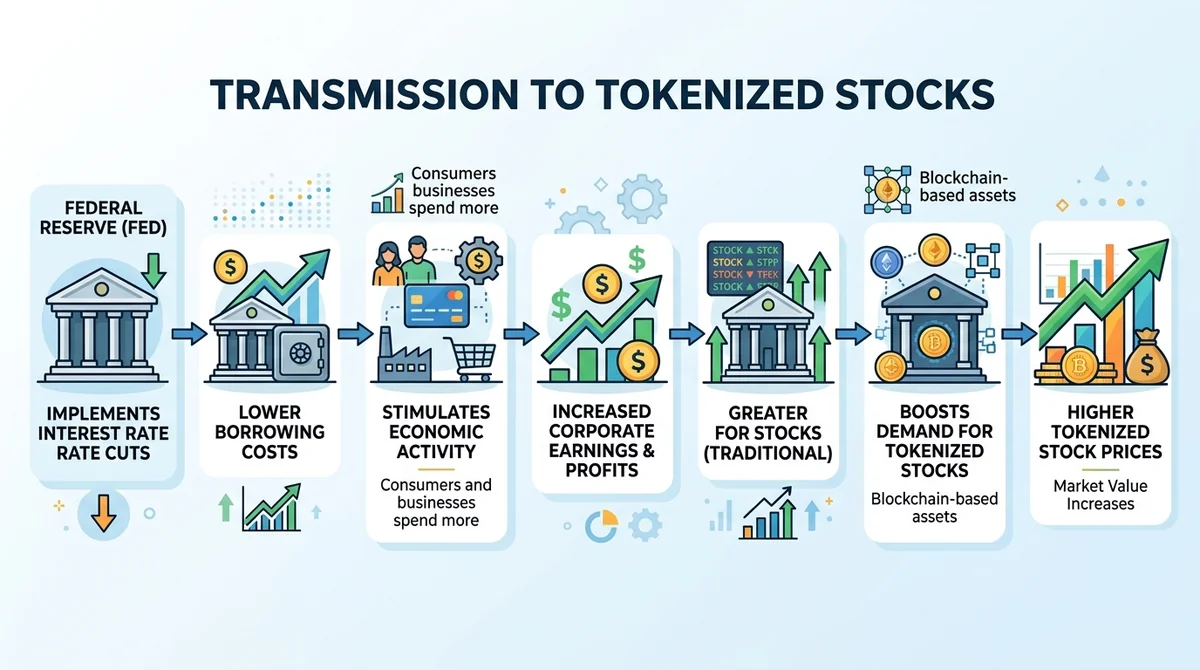
Tokenized stock valuation follows the corresponding U.S. stock price and requires traditional equity valuation models (e.g., P/E ratio, discounted cash flow). Rate cuts lift U.S. equity valuation by lowering the discount rate, which then transmits to tokenized stock prices. However, tokenized stocks typically have no dividends or voting rights and carry a liquidity premium, potentially amplifying interest-rate sensitivity. Specific valuation must reference the underlying company's fundamentals; tokenization itself does not change the valuation logic but may introduce additional risk premium.
#How Does the Rate Path Affect the Attractiveness of Treasury RWAs?
#How to Weigh Coupon Income vs. Price Appreciation for Treasury RWAs During Rate Cuts?
During a rate-cut cycle, coupon rates on newly issued Treasury RWAs decline, but price appreciation of existing bonds may partially offset the income loss. Investors must weigh coupon income against capital gains; the longer the duration, the more sensitive the price is to rate changes. Tokenized bonds may offer 24/7 trading and fractionalization, but liquidity may be lower, and attention should be paid to underlying Treasury custody fee and redemption mechanisms. These trade-offs are similar to traditional bonds, but tokenization features may alter liquidity risk.
#What Are the Similarities and Differences Between Treasury RWAs and Traditional Treasury ETFs?
Both Treasury RWAs and traditional Treasury ETFs provide exposure to Treasuries, but RWAs are blockchain-based, allowing fractionalization and 24/7 trading, while traditional ETFs are limited by trading hours. RWA liquidity may be lower, and there are smart contract and custody fee risks; traditional ETFs generally have better liquidity and more mature regulation. In a rate-cut environment, price movements of both are directionally aligned, but RWA liquidity premium may cause tracking error. Investors should choose based on their own risk tolerance.
#What Are the Risks and Divergences for Tokenized Assets in a Rate-Cut Cycle?
#Will Tracking Error of Tokenized Assets Widen During Rate Cuts?
When market volatility increases, tokenized assets may deviate from underlying asset prices, causing tracking error to widen. Rate-cut cycles are often accompanied by rising volatility, and less liquid tokenized assets are more prone to premiums or discounts. Investors should monitor market maker depth and redemption mechanisms. However, the magnitude of tracking error depends on the specific product design and liquidity conditions, and cannot be generalized.
#How to Assess Underlying Asset Custody and Counterparty Risk?
Underlying assets of tokenized assets are typically held by custodians, and custodian credit risk and smart contract risk must be considered. Rate-cut cycles may exacerbate financial institution stress, increasing counterparty default risk. Regulatory uncertainty may also affect tokenized asset liquidity; investors should evaluate prudently. These risks exist in traditional finance as well, but tokenization may introduce new technical risks.
#Which Indicators and Events Should Be Monitored Next?
#Which Interest Rate Indicators Can Signal Tokenized Asset Trends?
Monitor the 2-year Treasury yield and federal funds rate futures, which reflect market expectations for the short-term rate path. The relationship between the VIX and tokenized asset premiums is also worth tracking. These indicators are widely followed, but the tokenized assets news market is small, so their effectiveness may be limited.
#How Do Fed Policy Meetings Affect the Tokenized Market?
The Fed dot plot and balance sheet runoff pace affect liquidity expectations, and tokenized market volatility may increase around policy meetings. Investors should watch for changes in wording in meeting statements and press conferences. However, the tokenized market is influenced by multiple factors, and Fed policy is only one of them.
#FAQ
Q: During a rate-cut cycle, does a decline in Treasury RWA coupon rates necessarily mean total return will decline? A: Not necessarily. Coupon rates fall but bond prices rise; total return depends on duration and the magnitude of rate changes. If rates fall significantly, capital gains may exceed coupon losses.
Q: What is the difference between tokenized stocks and actual U.S. stocks? A: Tokenized stocks provide price exposure but do not represent actual equity ownership; they typically have no dividends or voting rights. Their prices may deviate from actual U.S. stocks due to liquidity premium.
Q: Is the impact of rate cuts on tokenized assets immediate? A: Transmission involves a time lag. Rate changes first affect underlying asset prices, then transmit to tokenized assets, and liquidity premium may delay or amplify the reaction.
Q: What are the main risks for tokenized assets during a rate-cut cycle? A: Key risks include widening tracking error, custody fee counterparty risk, smart contract vulnerabilities, and regulatory uncertainty. Volatility may intensify when liquidity is low.
Q: How to track the impact of rate cuts on the tokenized market? A: Monitor the 2-year Treasury yield, federal funds rate futures, VIX, and premium/discount levels of tokenized assets.
FAQ
During a rate-cut cycle, does a decline in Treasury RWA coupon rates necessarily mean total return will decline?
Not necessarily. Coupon rates fall but bond prices rise; total return depends on duration and the magnitude of rate changes. If rates fall significantly, capital gains may exceed coupon losses.
What is the difference between tokenized stocks and actual U.S. stocks?
Tokenized stocks provide price exposure but do not represent actual equity ownership; they typically have no dividends or voting rights. Their prices may deviate from actual U.S. stocks due to liquidity premium.
Is the impact of rate cuts on tokenized assets immediate?
Transmission involves a time lag. Rate changes first affect underlying asset prices, then transmit to tokenized assets, and liquidity premium may delay or amplify the reaction.
What are the main risks for tokenized assets during a rate-cut cycle?
Key risks include widening tracking error, custody fee counterparty risk, smart contract vulnerabilities, and regulatory uncertainty. Volatility may intensify when liquidity is low.
How to track the impact of rate cuts on the tokenized market?
Monitor the 2-year Treasury yield, federal funds rate futures, VIX, and premium/discount levels of tokenized assets.
Related Terms
Ready to try? Test the strategy on MSX with small positions. Educational content only — not investment advice.