Transmission Path of Tokenized Bond Credit Spreads During Earnings Season: A Study of On-Chain Bond Price Sensitivity to Earnings Surprises
Tokenized bond credit spreads and earnings surprises: on-chain price sensitivity and risks. Data not disclosed; not investment advice.
⚠ This article is a digital asset multi-asset research piece and does not constitute investment advice. Investing involves risk; please make decisions prudently.
Tokenized bond credit spreads are not a passive outcome of earnings season; rather, earnings surprises reprice on-chain bond risk premiums through default probability and recovery rate expectations. However, the current tokenized bond market has shallow depth, and most sensitivity parameters for on-chain price reactions to earnings surprises are undisclosed, leaving quantitative evidence insufficient. This article is based solely on publicly available information for theoretical deduction, marks missing data as "data not disclosed," and provides no unverified specific figures.
#Core Conclusions
Tokenized bond credit spreads change during earnings season because earnings surprises alter market expectations of the issuer's default risk, which transmits to on-chain bond prices. However, due to limited public trading data, most sensitivity parameters are undisclosed, and the research conclusions carry significant limitations. Do not treat any transmission path in this article as confirmed fact; instead, view them as theoretical frameworks and hypotheses awaiting validation.
#Instrument / Business Line Definition
Tokenized bonds are digital assets representing exposure to specific bond prices, falling under tokenized securities/RWA. The research subject is the change in tokenized bond credit spreads during earnings season and the sensitivity of on-chain prices to earnings surprises. Note that trading tokenized bonds is not equivalent to holding the actual bonds; legal structures and custody arrangements may affect price behavior. For related liquidity risk, see Tokenized Treasury Liquidity Risk Research.
#Key Mechanisms and Data
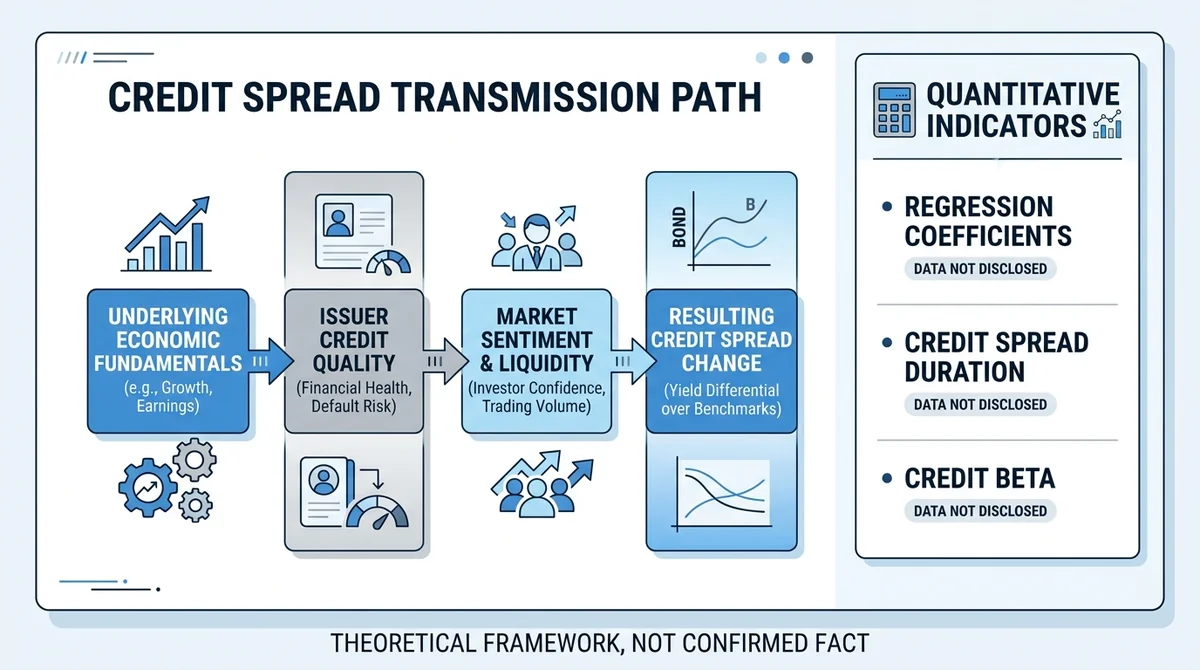
- Transmission path: earnings surprise → changes in default probability and recovery rate expectations → credit spread repricing → on-chain bond price movement in the opposite direction. This path is based on traditional credit bond pricing theory; in tokenized bonds, factors such as on-chain liquidity discounts/premiums and custody structures must be considered, and it does not hold strictly under all market conditions.
- Quantitative indicators: regression coefficients of price changes on earnings surprises, credit spread duration/credit beta, etc., but current public trading data are limited, and most sensitivity parameters are undisclosed; this article provides no regression coefficients or sensitivity values.
- Data reminder: This article uses no specific figures because public trading and spread data for tokenized bonds are mostly undisclosed. For tracking, refer to disclosures from issuers or market data platforms; data cutoff date is missing.
#Core Drivers
- Magnitude and direction of earnings surprises (EPS surprise, management guidance revisions)
- Market depth and liquidity of tokenized bonds
- Maturity of on-chain/off-chain arbitrage infrastructure; for related arbitrage constraints, see Tokenized Stock vs. Underlying Equity Arbitrage Mechanism Research
- Disclosure quality and credit rating adjustment signals
#Key Participants
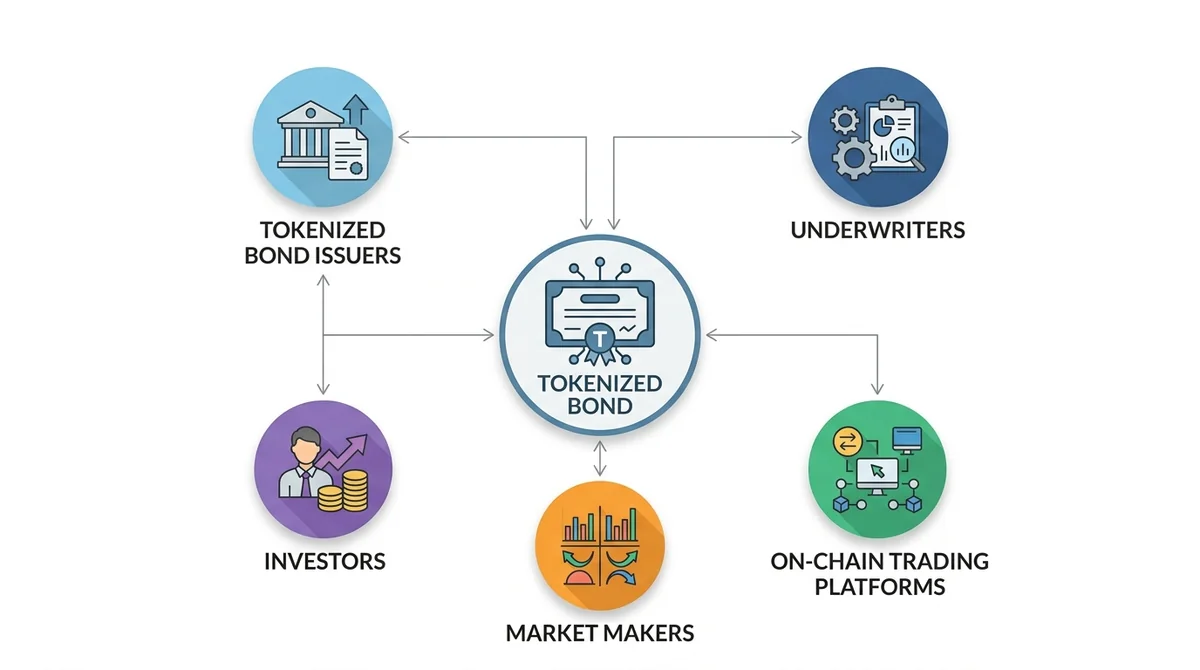
Tokenized bond issuers, underwriters, on-chain trading platforms, market makers, and investors. This research does not recommend any specific instrument; it only lists participant types.
#Risks and Divergences
- Insufficient sample representativeness leads to biased sensitivity estimates
- Insufficient liquidity amplifies price noise
- Differences in legal structures across jurisdictions increase uncertainty
- Regulatory changes may alter the transmission path
- This article is based on theoretical deduction and has not been empirically tested; the tokenized bond market is still immature, and historical patterns may fail
#What to Watch Next
- EPS surprises and management guidance during earnings season
- On-chain bond trading volume and position changes
- Credit rating adjustment signals
- Whether public datasets exist to support rigorous validation; for on-chain yield curve layering, see Tokenized Treasury Term Structure and On-Chain Yield Curve Research
#FAQ
Q: How are tokenized bond credit spreads affected by earnings surprises during earnings season? A: In theory, earnings surprises change market expectations of the issuer's default probability and recovery rate, pushing credit spreads wider or narrower, which ultimately transmits to on-chain bond prices; however, the actual transmission strength is limited by liquidity and data availability.
Q: How can the sensitivity of on-chain bond prices to earnings surprises be quantified? A: It can be measured by regressing earnings surprises against price changes or by observing the magnitude of credit spread movements, but currently public data are limited, most sensitivity parameters are undisclosed, and no specific values can be given.
Q: What are the differences in credit spread transmission between tokenized bonds and off-chain bonds? A: Tokenized bonds offer 24/7 trading and faster settlement (depending on the specific platform), theoretically reflecting earnings surprises faster, but due to limited liquidity and arbitrage infrastructure, short-term deviations may occur, with long-term convergence. This conclusion is a theoretical inference and lacks empirical support.
Q: What risks should be noted when studying credit spread transmission for tokenized bonds? A: Beware of sample bias, price noise caused by insufficient liquidity, and legal structure uncertainty, which may distort sensitivity estimates.
Q: What key data should be tracked during earnings season to validate the transmission path? A: EPS surprises, management guidance, on-chain bond trading volume and credit spread changes, and credit rating adjustment signals; however, there is currently a lack of public datasets, and data tracking should rely on issuer disclosures.
FAQ
How are tokenized bond credit spreads affected by earnings surprises during earnings season?
In theory, earnings surprises change market expectations of the issuer's default probability and recovery rate, pushing credit spreads wider or narrower, which ultimately transmits to on-chain bond prices; however, the actual transmission strength is limited by liquidity and data availability.
How can the sensitivity of on-chain bond prices to earnings surprises be quantified?
It can be measured by regressing earnings surprises against price changes or by observing the magnitude of credit spread movements, but currently public data are limited, most sensitivity parameters are undisclosed, and no specific values can be given.
What are the differences in credit spread transmission between tokenized bonds and off-chain bonds?
Tokenized bonds offer 24/7 trading and faster settlement (depending on the specific platform), theoretically reflecting earnings surprises faster, but due to limited liquidity and arbitrage infrastructure, short-term deviations may occur, with long-term convergence. This conclusion is a theoretical inference and lacks empirical support.
What risks should be noted when studying credit spread transmission for tokenized bonds?
Beware of sample bias, price noise caused by insufficient liquidity, and legal structure uncertainty, which may distort sensitivity estimates.
What key data should be tracked during earnings season to validate the transmission path?
EPS surprises, management guidance, on-chain bond trading volume and credit spread changes, and credit rating adjustment signals; however, there is currently a lack of public datasets, and data tracking should rely on issuer disclosures.
Related Terms
Ready to try? Test the strategy on MSX with small positions. Educational content only — not investment advice.