Decomposing Yield Sources of Tokenized Treasury Bonds (RWA): Reserve Interest, Custody Fee, and On-Chain Distribution Differences (2026)
Breaking down RWA treasury yield: how reserve interest is generated, how custody fee and costs erode returns, and why on-chain distribution makes the same rate yield different APYs.
⚠ This article is digital asset research and does not constitute investment advice. Investing involves risk; please make decisions carefully.
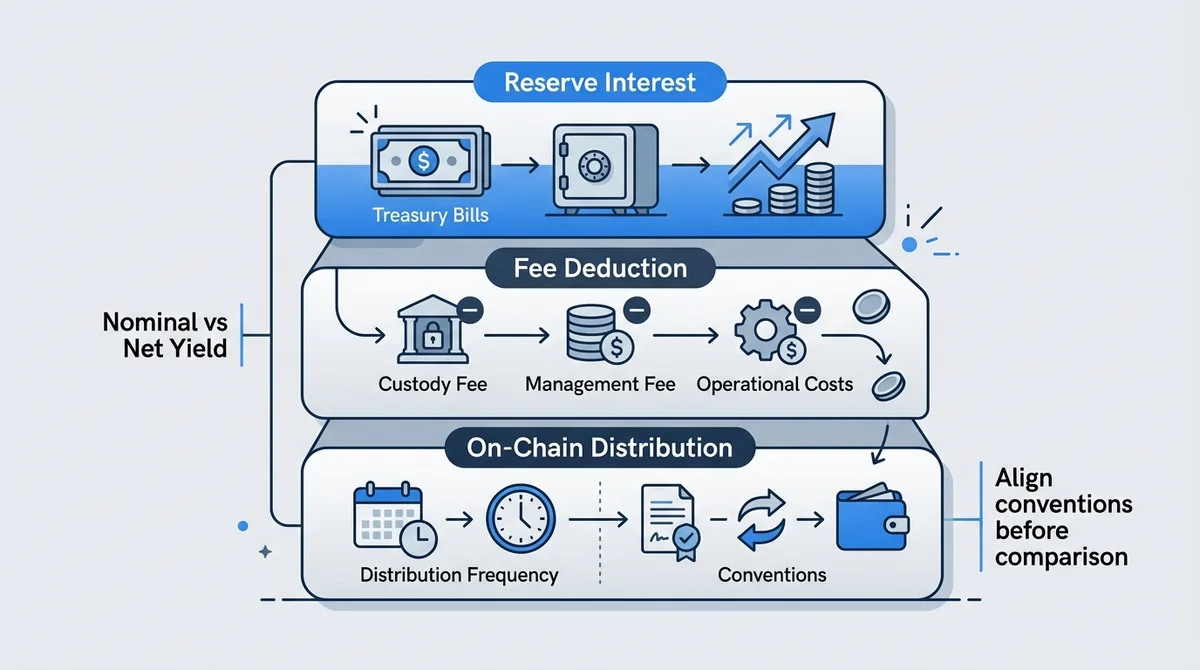
The yield of tokenized treasury bonds (RWA) is not a single number; it is the product of a three-stage chain: "reserve interest → deduction of custody fee and management costs → distribution according to on-chain distribution conventions." Nominal yield and the yield holders actually receive are not the same measure; before comparing across products, one must align the interest calculation base, distribution frequency, and whether fees are included. This article does not contain verified project-level specific figures; any specific fee rates, reserve composition, and APY numbers must be based on each project's latest disclosures (not independently verified in this article).
#Core Conclusion
The yield of tokenized treasury bonds comes from interest on underlying reserve assets such as short-term tokenized treasury bonds; after deducting custody fee, management, and operational costs, it is distributed according to on-chain distribution conventions. Nominal yield and net yield differ due to convention differences; before comparison, one must align the interest calculation method, distribution frequency, and fee conventions. This conclusion is an inference at the mechanism level; the net yield of specific products still depends on their disclosed fees and distribution rules, which this article has not verified one by one.
#Target/Business Line Definition
This article studies the business line of "tokenized treasury bonds (RWA)," i.e., the product form that tokenizes reserve assets such as short-term treasury bonds and distributes yield to holders on-chain. The research boundary includes: underlying reserve assets (short-term treasury bills, etc.), yield distribution mechanism (on-chain distribution conventions), and fee structure (custody fee, management, operations). This article does not cover other multi-asset business lines such as tokenized stocks or how does perpetual futures funding rate work, nor does it make buy/sell recommendations or price predictions for any specific product.
#Key Mechanisms and Data
#Where does the yield of tokenized treasury bonds actually come from?
The yield chain of tokenized treasury bonds can be broken into three layers: the first layer is interest generated by underlying reserve assets; the second layer is the deduction of custody fee, management, and operational costs; the third layer is distribution to holders according to on-chain distribution conventions. Any change in the conventions of any of the three layers will change the final displayed APY number.
- The underlying reserve consists of assets such as short-term tokenized treasury bonds; interest comes from coupon payments and reinvestment-related returns (mechanism description; specific figures are subject to each project's latest reserve disclosures, not independently verified in this article).
- Yield chain: reserve interest → deduct custody fee/management/operational costs → distribute according to on-chain distribution conventions.
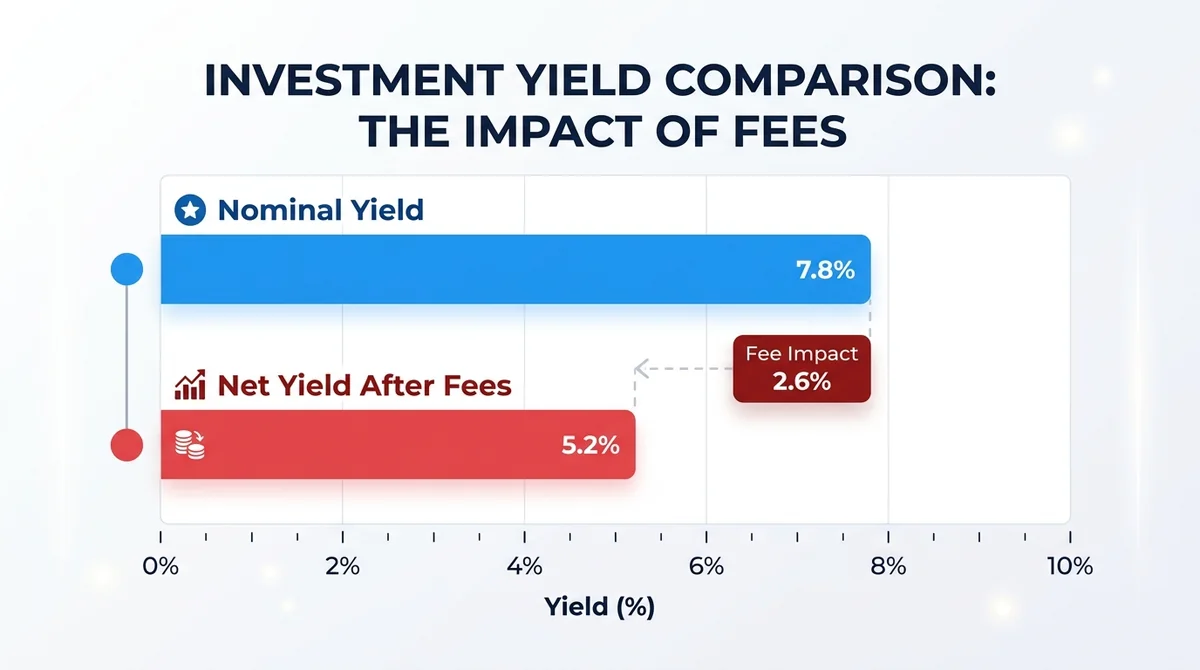
- The convention difference between nominal yield and net yield must be clearly labeled; yield figures without labeled conventions should not be directly compared horizontally.
#The reserve interest layer: what determines the underlying yield of tokenized treasury bonds?
The variety and maturity structure of reserve assets determine the interest level and volatility characteristics. Short-term treasury bills and medium- to long-term treasury bond have different coupon structures; changes in the interest rate environment are transmitted to reserve interest through reinvestment and rolling maturities.
- Reserve structure (maturity, variety) affects interest level and volatility (mechanism description; specific composition is subject to project reserve reports, not independently verified in this article).
- Reserve interest changes with the market interest rate environment; historical yields cannot be linearly extrapolated.
- The granularity of project reserve disclosures varies by project; missing items should be labeled "data not public" and should not be defaulted to zero or optimal.
#The custody fee layer: which costs erode the yield of tokenized treasury bonds?
Between reserve interest and the yield holders receive, there are usually deduction items such as custody fee, management fees, and operational and compliance costs. Different projects disclose fee rates under inconsistent conventions; some disclose a comprehensive fee rate, some list items separately, and some disclose only management fees, so "comprehensive fee rate" may not be comparable.
- Cost items may include custody fee, management fees, and operational and compliance costs (mechanism description; specific fee rates are subject to each project's fee disclosures, not independently verified in this article).
- Different projects have inconsistent fee disclosure conventions; comprehensive fee rates may not be comparable.
- When fee disclosures are insufficient, treat them as uncertainty and do not default costs to zero.
#The on-chain distribution layer: why does the same reserve interest rate produce different APYs?
Even if the underlying reserve interest rate is the same, the interest calculation base, distribution frequency, and reinvestment assumptions in on-chain distribution conventions will cause differences in displayed APY. Daily vs. weekly interest calculation, simple vs. compound display, and fee-inclusive vs. fee-exclusive conventions all produce different APY numbers.
- Interest calculation base, distribution frequency, and reinvestment assumptions affect displayed APY (mechanism description; specific rules are subject to project yield distribution rule disclosures, not independently verified in this article).
- Different conventions make numbers not directly comparable.
- Before comparison, align: interest calculation method, frequency, and whether fees are included.
#Core Drivers
- Interest Rate Environment: Market short-term interest rate levels are transmitted to reserve interest through reserve asset coupons and reinvestment, and are the fundamental variable of yield levels.
- Reserve Structure Choice: Maturity and variety allocation affect interest levels and volatility, and also affect sensitivity to interest rate changes.
- Fee Structure: The comprehensive level of custody fee, management, and operational costs directly determines the dilution ratio from reserve interest to net yield.
- On-Chain Distribution Rules: Interest calculation base, distribution frequency, and reinvestment assumptions determine the displayed APY difference under the same reserve interest rate.
#Key Participants
Roles involved in the tokenized treasury bonds business line include: underlying reserve asset providers (short-term tokenized treasury bonds, etc.), custody fee and operational service providers, tokenization issuers, and designers of on-chain yield distribution mechanisms. This article lists factual roles only; it does not recommend tokens or evaluate the merits of specific institutions.
#Risks and Divergences
- Insufficient Disclosure Risk: Insufficient disclosure of fee details and reserve composition is a common problem; holders find it difficult to fully verify the calculation process of net yield.
- Convention Mixing Risk: Directly comparing APY numbers that are fee-inclusive vs. fee-exclusive, simple vs. compound, or of different distribution frequencies can easily lead to misreading of overstated yields.
- Interest Rate Extrapolation Risk: Historical reserve interest levels cannot be linearly extrapolated; changes in the interest rate environment will change the yield base.
- Liquidity and Redemption Risk: On-chain redemption paths, redemption delays, and secondary market depth affect actual exit costs, and this part is not sufficiently disclosed in most projects (not independently verified in this article).
- Bear Case Perspective: Some views hold that, when fee and reserve disclosure granularity is insufficient, the "on-chain yield" of tokenized treasury bonds is less verifiable than traditional money market funds, and a discount for uncertainty should be retained when comparing.
#What to Watch Next
- Updates to reserve composition disclosures (maturity structure, variety details).
- Changes in fee structure and fee detail disclosures.
- Adjustments to on-chain distribution frequency and interest calculation conventions.
- Impact of convention adjustments on the comparability of historical data.
This page lists observation items only and does not provide directional judgments.
#FAQ
Q1: Is the yield of tokenized treasury bonds the same as money market fund yield? A: Not entirely equivalent. Both may involve short-term tokenized treasury bonds at the underlying level, but tokenized treasury bonds also go through on-chain distribution conventions and fee deductions; the convention difference between nominal yield and net yield must be checked separately.
Q2: Why can't the APY numbers of two tokenized treasury bond products be directly compared? A: Because the interest calculation base, distribution frequency, reinvestment assumptions, and whether fees are included may differ; the same reserve interest rate will produce different APYs under different conventions.
Q3: What does custody fee generally include? A: It may include custody fee, management fees, and operational and compliance costs; specific items and disclosure conventions vary by project, and insufficient disclosure should be treated as uncertainty.
Q4: Does reserve interest change with market interest rates? A: Yes. Coupons and reinvestment of reserve assets are affected by the market interest rate environment; historical yields cannot be linearly extrapolated.
Q5: How should researchers label uncertainty? A: They should label data sources, disclosure cutoff dates, and missing items, and provide warnings about possible yield misreading caused by convention mixing.
FAQ
Is the yield of tokenized treasury bonds the same as money market fund yield?
Not entirely equivalent. Both may involve short-term tokenized treasury bonds at the underlying level, but tokenized treasury bonds also go through on-chain distribution conventions and fee deductions; the convention difference between nominal yield and net yield must be checked separately.
Why can't the APY numbers of two tokenized treasury bond products be directly compared?
Because the interest calculation base, distribution frequency, reinvestment assumptions, and whether fees are included may differ; the same reserve interest rate will produce different APYs under different conventions.
What does custody fee generally include?
It may include custody fee, management fees, and operational and compliance costs; specific items and disclosure conventions vary by project, and insufficient disclosure should be treated as uncertainty.
Does reserve interest change with market interest rates?
Yes. Coupons and reinvestment of reserve assets are affected by the market interest rate environment; historical yields cannot be linearly extrapolated.
How should researchers label uncertainty?
They should label data sources, disclosure cutoff dates, and missing items, and provide warnings about possible yield misreading caused by convention mixing.
Related Terms
Ready to try? Test the strategy on MSX with small positions. Educational content only — not investment advice.