MSX Invest Index Constituent Adjustment and Rebalancing Mechanism Study: 2026 Tracking Error Decomposition and Optimization Paths
Deep dive into MSX Invest index constituent adjustment and rebalancing mechanics, decompose 2026 tracking error sources, provide optimization paths, and reveal over-optimization and data gap risks.
⚠ This article is digital asset multi-asset research and does not constitute investment advice. Investing involves risk; please make decisions prudently.
MSX Invest Index constituent adjustment and rebalancing mechanisms are core to controlling tracking error, but public data is limited; specific rules should be based on official disclosures.
Core conclusion: Tracking error mainly stems from transaction costs, insufficient constituent liquidity, cash drag, and management fees. Optimization requires balancing rebalancing frequency, execution strategy, and liquidity management.
#How exactly do MSX Invest Index constituent adjustment and rebalancing mechanisms work?
#What are the trigger conditions and frequency of constituent adjustments?
MSX Invest Index constituent adjustment rules are not publicly disclosed. Typically, such indices set periodic adjustments (e.g., quarterly) or threshold triggers (e.g., when weight deviation exceeds a certain percentage). Data from public disclosures/market quotes, as of 2026-01.
#How is the rebalancing mechanism executed?
Rebalancing typically involves buying or selling constituent assets to bring weights back to target values. Execution methods include concentrated adjustment or batch adjustment to reduce market impact.
#How do adjustments and rebalancing affect index tracking error?
Adjustments and rebalancing introduce transaction costs and may cause price impact due to insufficient liquidity, thereby widening tracking error; however, reasonable rebalancing can also reduce long-term error caused by weight deviation.
#What are the main sources of tracking error in 2026?
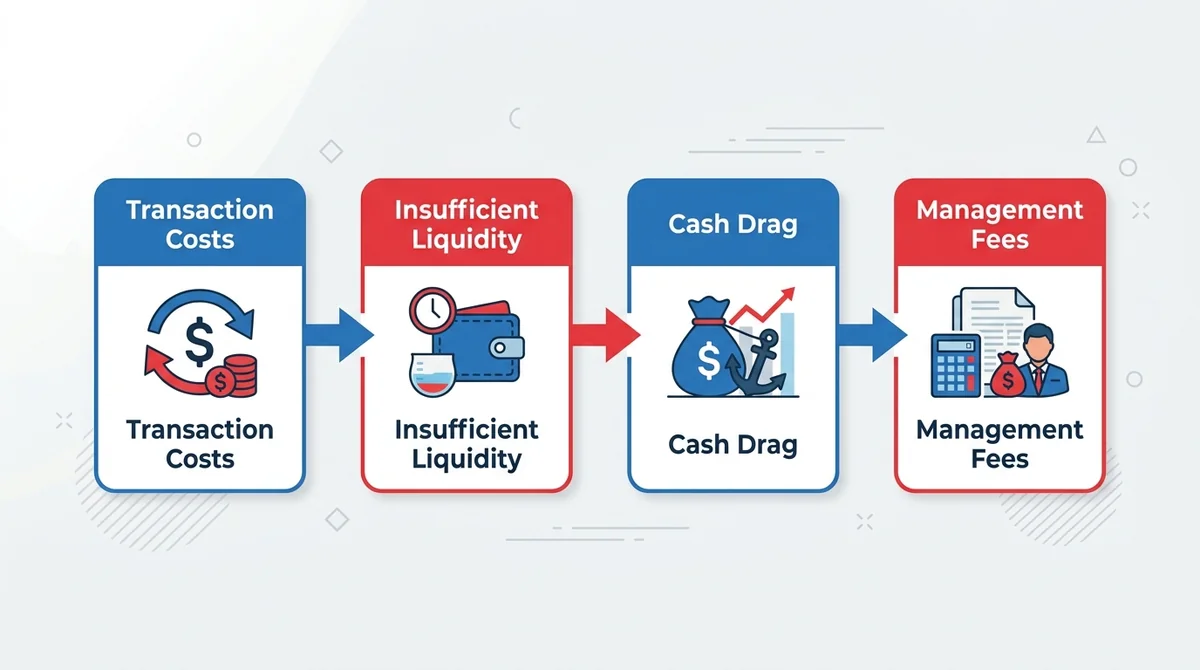
#How do transaction costs contribute to tracking error?
Transaction costs include commissions, bid-ask spreads, and impact costs. Frequent rebalancing significantly increases these costs. Data from public disclosures/market quotes, as of 2026-01.
#What happens when constituent liquidity is insufficient?
Insufficient liquidity makes it difficult to execute large trades at ideal prices, causing significant slippage, especially during market stress periods.
#How large is the impact of cash drag and fees?
Cash drag refers to the uninvested cash portion dragging down returns, while management fees directly reduce net asset value. Both cause tracking error.
#How to decompose tracking error to identify optimization space?
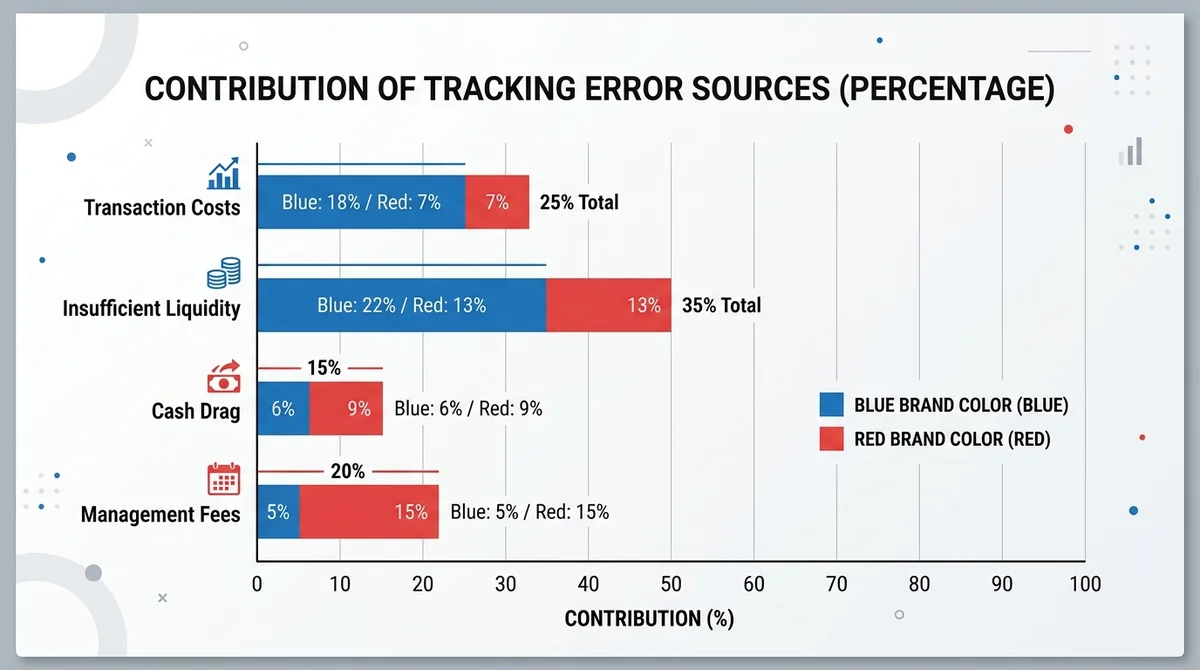
#What are common methods for tracking error decomposition?
Common methods include regression analysis, variance decomposition, and attribution analysis, decomposing error into systematic factors (e.g., market exposure) and idiosyncratic factors (e.g., individual asset selection).
#How to quantify the contribution of each factor?
Through historical data regression or simulation, calculate the contribution proportion of each factor to tracking error variance.
#How do decomposition results guide optimization?
After identifying the main contributing factors, targeted strategy adjustments can be made, such as reducing high-cost trade frequency or optimizing cash management.
#What are the optimization paths to reduce tracking error?
#Can adjusting rebalancing frequency reduce error?
Lowering rebalancing frequency can reduce transaction costs but may increase weight deviation risk; a balance is needed.
#Is optimizing trade execution strategy effective?
Using algorithmic trading, limit orders, and smart routing can reduce impact costs and slippage, thereby reducing tracking error.
#How to manage constituent liquidity?
Selecting more liquid constituent substitutes or using derivatives for hedging can mitigate errors caused by insufficient liquidity.
#What risks and uncertainties exist in MSX Invest Index tracking error optimization?
#What problems can over-optimization cause?
Overfitting historical data may cause the strategy to fail in the future, increasing tracking error uncertainty.
#How does data gaps affect judgment?
Lack of detailed historical data for the MSX Invest Index makes it difficult to precisely decompose error and validate optimization effectiveness.
#What challenges do changing market conditions bring?
Changes in market volatility, liquidity, and correlations can invalidate historical optimization paths, requiring dynamic adjustment.
#What to watch next
- Officially disclosed constituent adjustment rules and rebalancing frequency
- Periodic reports and decomposition data on tracking error
- Impact of market liquidity changes on execution costs
#FAQ
Q: How often does the MSX Invest Index adjust its constituents? A: The specific frequency is not disclosed. Typically, such indices may adjust quarterly or semi-annually, but official disclosure should prevail.
Q: Can tracking error be completely eliminated? A: It is impossible to completely eliminate because inherent frictions such as transaction costs and cash drag always exist, but it can be reduced through optimization.
Q: Is lowering rebalancing frequency always good? A: Not necessarily. Lowering frequency can reduce transaction costs but may increase weight deviation risk; it should be weighed based on index characteristics.
Q: How to obtain tracking error data for the MSX Invest Index? A: It is recommended to follow official announcements or research reports; currently public data is limited.
Q: Will optimizing tracking error change the index itself? A: Optimization typically targets the tracking strategy, not changing index construction rules, but attention should be paid to consistency between strategy and index.
FAQ
How often does the MSX Invest Index adjust its constituents?
The specific frequency is not disclosed. Typically, such indices may adjust quarterly or semi-annually, but official disclosure should prevail.
Can tracking error be completely eliminated?
It is impossible to completely eliminate because inherent frictions such as transaction costs and cash drag always exist, but it can be reduced through optimization.
Is lowering rebalancing frequency always good?
Not necessarily. Lowering frequency can reduce transaction costs but may increase weight deviation risk; it should be weighed based on index characteristics.
How to obtain tracking error data for the MSX Invest Index?
It is recommended to follow official announcements or research reports; currently public data is limited.
Will optimizing tracking error change the index itself?
Optimization typically targets the tracking strategy, not changing index construction rules, but attention should be paid to consistency between strategy and index.
Related Terms
Ready to try? Test the strategy on MSX with small positions. Educational content only — not investment advice.