Index Discoverability Gaps in Tokenized Stock Corporate Actions: Search Intent Layering, Content Supply Mismatch, and Capture Paths (2026)
Breaking down index discoverability gaps in tokenized stock corporate actions via search intent layering, content supply mismatch, and capture path design, with verifiable monitoring methods and research limitations.
⚠ This article is digital-asset multi-asset research and does not constitute investment advice. Investing carries risk; please make decisions prudently.
Core conclusion: The index discoverability gap in tokenized stock corporate actions is essentially "real search intent exists, but the index lacks high-quality pages that can directly answer that intent." It is not the same problem as pure ranking competition and must be diagnosed and captured separately by intent layer. The layering and capture framework proposed in this article is an analytical inference; specific figures for the scale of the gap are not publicly available.
#What is the index discoverability gap in tokenized stock corporate actions?
The index discoverability gap in tokenized stock corporate actions refers to the existence of real search intent while the index lacks pages that can directly answer that intent. It is not the same problem as pure ranking competition. This definition is at the level of an analytical framework, not an empirical conclusion about the current scale of the market gap.
Scope note: "Tokenized stock" in this article refers to token-form exposure to U.S. equity prices and is not equivalent to holding actual U.S. equity shares; a tokenized stock perpetual is a derivative and is even further from actual shares.
#What is the difference between a discoverability gap and a ranking gap?
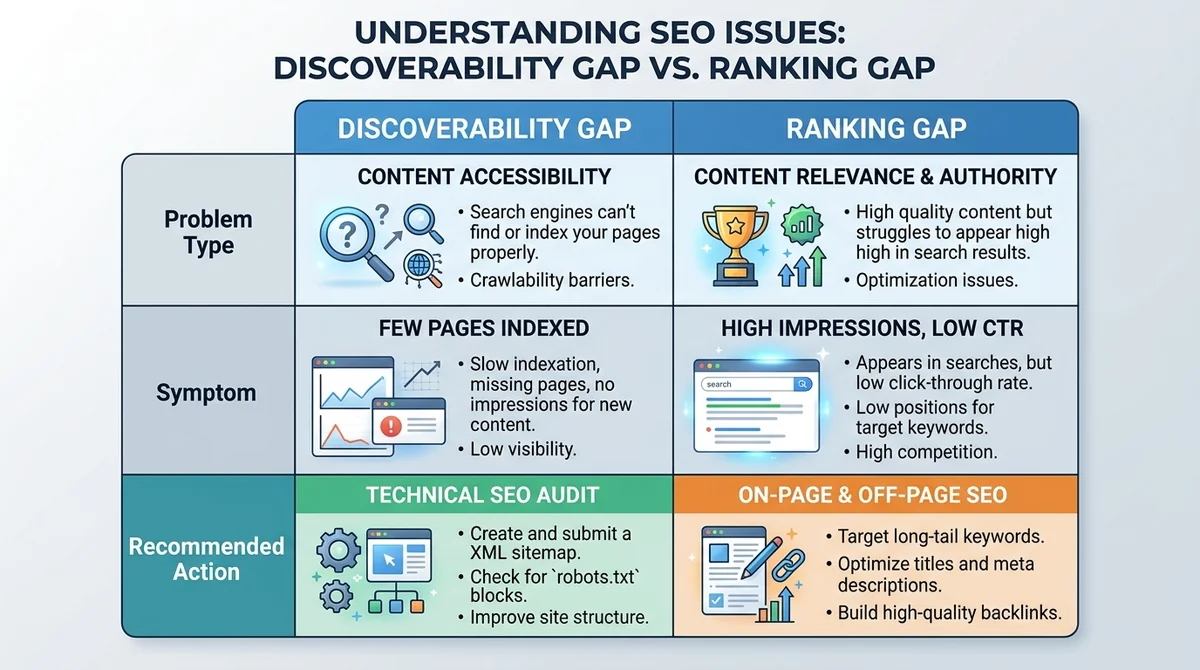
A ranking gap concerns "pages exist but cannot rank"; a discoverability gap concerns "the index simply has no page that can answer that intent." The former is a competition problem, the latter a supply problem. Conflating the two leads to using SEO ranking tactics to solve a problem that should be solved by content building.
#Why are gaps more likely for corporate-action queries?
Corporate actions have three characteristics: event-driven (stock splits, dividends, mergers, etc. trigger short-cycle queries), highly time-sensitive (query volume spikes within the event window), and terminologically fragmented (corporate action, company action, entitlement adjustment, and other labels coexist). Combined, these three characteristics make queries within the event window difficult to cover with static pages laid out in advance. Note that this judgment is an inference based on query characteristics and has not yet been validated with query-volume data.
#How do you define a "gap" rather than "intense competition"?
The criteria should distinguish "no supply" from "supply that cannot be extracted": the former means no relevant page exists in the index; the latter means pages exist but lack self-contained conclusions or use inconsistent definitions, so AI search cannot extract directly. Only by separating these two can you decide whether to add content or change structure.
Data note: Specific gap scale is not publicly available and must be verified with your own index and query data; this article does not provide specific gap ratios.
#How can search intent for tokenized stock corporate actions be layered?
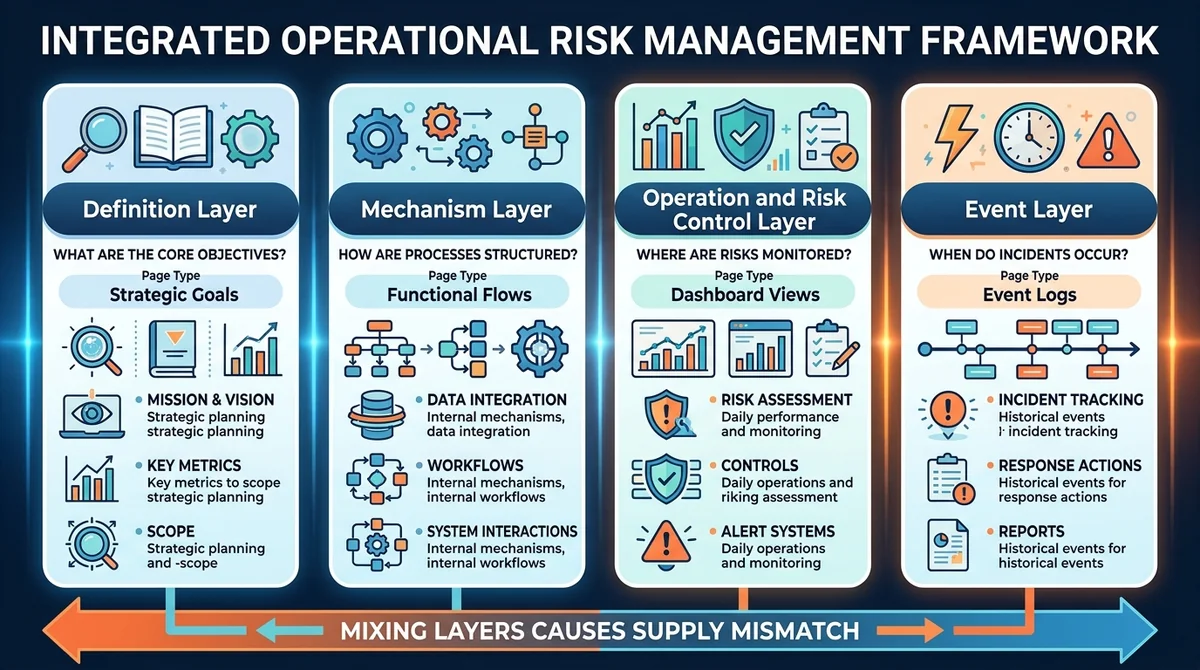
Search intent for tokenized stock corporate actions can be divided into four types: definition layer, mechanism layer, operation and risk-control layer, and event layer. Different layers require different page types to capture, and mixing them causes supply mismatch. This layering is an analytical framework whose effectiveness must be tested with actual query data.
#What does definition-layer intent ask?
Definition-layer intent asks "what is a corporate action" and "is a tokenized stock consistent with the actual U.S. equity." This intent requires a clear conceptual scope paragraph and should clarify that a tokenized stock is price exposure, not equity.
#What does mechanism-layer intent ask?
Mechanism-layer intent asks how corporate actions transmit to tokenized price exposure and contract parameters (such as multiplier adjustments, mark price handling, and margin parameter changes). This intent requires methodology-type content, not restatements of announcements. It must be emphasized that specific transmission rules depend on each platform's disclosures, and this article does not assume any platform's established handling.
#What does operation and risk-control-layer intent ask?
Operation and risk-control-layer intent asks "how should positions be handled," "does exposure change," and "where is the risk." This intent requires risk-control pages that provide conditional conclusions and risk warnings.
#How should event-layer intent (splits, dividends, mergers) be classified separately?
Event-layer intent consists of short-cycle queries triggered by a single event, time-sensitive and volatile. It is not suitable for long-term static pages; it should be handled as event pages, with internal links directing traffic to the mechanism and risk-control layers.
#Why does content supply mismatch search intent?
Content supply for tokenized stock corporate actions is concentrated at the announcement and introductory-explanation layers, while supply at the mechanism and operation/risk-control layers is insufficient; combined with inconsistent terminology, pages cannot align with search intent. This judgment is based on sampled observation of public content and has not yet been fully statistically verified.
#Where is supply concentrated, and where is the gap?
Supply is concentrated in platform announcements, introductory explanations, and news restatements; the gap is concentrated in methodology content at the mechanism and operation/risk-control layers. This judgment is based on sampled observation of public content; specific proportions of the supply structure are not publicly available and must be verified with sampled crawling.
#Why is platform-announcement content hard for AI search to extract directly?
Announcement-type content usually lacks self-contained conclusions and consistent definitions: it describes "what happened" but rarely answers "what this means for price exposure." AI search extraction requires independently citable conclusion sentences, and the announcement format inherently fails this condition. This judgment is a mechanistic inference; the actual extraction hit rate still needs to be validated with real citation data.
#How does inconsistent terminology amplify the mismatch?
Corporate action, company action, entitlement adjustment, and other terms coexist, so query terms cannot align with page titles. When terminology is inconsistent, even if a page exists, it may fail to match intent due to wording differences.
#How should capture paths be designed to be extractable by AI search?
Capture paths should match page types to intent layers and give each subsection self-contained conclusions and source annotations so AI search can extract directly rather than relying on whole-page semantic guessing. The following are methodological recommendations, not validated best practices.
#Which page types should match different intent layers?
The definition layer corresponds to the conceptual scope section of a research page; the mechanism layer corresponds to research and methodology pages; the operation and risk-control layer corresponds to risk-control pages; the event layer corresponds to event pages. Avoiding using a single page to capture all intent layers is the first principle for reducing mismatch.
#How can a page be self-contained and citable?
Each subsection should provide a conclusion sentence with its own context, and key data should be annotated with source and as-of date. The criterion for a citable paragraph is that, when read in isolation from context, the conclusion still holds and contains no ambiguity.
#How can internal links direct event-layer traffic to the mechanism layer?
Event-layer pages use internal links to direct to the mechanism and risk-control layers, forming a capture loop. For example, after explaining the event itself, an event page links to mechanism explanations and risk-warning pages, converting short-cycle traffic into visits to the mechanism layer. The actual conversion effect of this loop must be verified with post-launch click-through data.
Related research: See our research on tokenized stock vs. underlying U.S. equity arbitrage mechanisms for spreads and execution costs, and Robinhood chain tokenized stocks and DeFi stimulus for platform-side developments.
#What are the limitations and disagreements of this gap analysis?
Gap analysis relies on index data as a demand proxy and is affected by event timeliness and insufficient platform disclosure; conclusions should be stated as conditional judgments rather than definitive findings.
#Can index data represent real demand?
Index data is a proxy indicator of demand, not equal to real demand. Search volume is affected by platform recommendations, media coverage, and event heat, and may be amplified or underestimated; therefore gap judgments should combine multi-source data for cross-validation.
#How does the timeliness of event-driven queries affect conclusions?
Event-driven queries are highly volatile, and the same query may yield opposite conclusions in different observation windows. Therefore conclusions must state the observation window to avoid treating a peak within the window as long-term demand.
#What judgment biases arise from insufficient platform disclosure?
When platform disclosure is insufficient, mechanism-layer descriptions can only give conditional conclusions. If a platform does not disclose specific handling rules for corporate actions, research can only describe "possible paths" and cannot assert actual execution methods.
Scope note: A tokenized stock perpetual is a derivative, further from actual shares, and its corporate-action transmission mechanism differs from spot exposure.
#What verifiable signals should be monitored next?
Going forward, intent-layer coverage, extraction hits, and internal-link paths should be used as verifiable signals to continuously monitor gap changes. This section lists only observation items and methods and does not predict outcomes.
#Which metrics can be used to continuously monitor the gap?
Monitoring metrics include: intent-layer query coverage (whether each intent layer has corresponding pages), page extraction hits (whether AI search cites the page's conclusion sentences), and internal-link click paths (whether the conversion path from event layer to mechanism layer is unobstructed).
#How can capture effectiveness be verified after content goes live?
Use your own index and query data for before-and-after comparison: establish a baseline before launch, then re-measure coverage and extraction hits with the same criteria after launch. Baseline values are not publicly available and must be established independently.
Related research: For gap analysis methods, see our MSX investment index gap analysis; for regulatory and policy dimensions, see the RWA policy landscape.
#FAQ
Q1: What is the core difference between a discoverability gap and a ranking gap?
A: A ranking gap is "pages exist but cannot rank"; a discoverability gap is "the index has no page that can answer that intent." The former is a competition problem, the latter a supply problem, and the solutions differ.
Q2: Why are gaps more obvious for corporate-action queries?
A: Because corporate actions are event-driven, highly time-sensitive, and terminologically fragmented queries; static pages are hard to cover in advance, and announcement-type content lacks extractable self-contained conclusions. This is an inference based on query characteristics and has not yet been validated with query-volume data.
Q3: Are corporate actions for tokenized stocks exactly the same as for actual U.S. equities?
A: No. A tokenized stock is price exposure, not equity; how corporate actions transmit depends on platform rules, and specific handling must follow platform disclosures. This article makes no assertion.
Q4: How do you judge whether a page is "extractable by AI search"?
A: Check whether each subsection has a conclusion sentence that holds without context, and whether key data is annotated with source and as-of date. Without these two points, extraction hit rates are usually low; this judgment is a methodological inference and must be tested with actual citation data.
Q5: Can the conclusions of this analysis be used directly for decision-making?
A: Not advisable. Index data is a demand proxy, event queries are volatile, and platform disclosure is insufficient; conclusions should be treated as conditional judgments and continuously verified with your own data.
FAQ
What is the core difference between a discoverability gap and a ranking gap?
A ranking gap is "pages exist but cannot rank"; a discoverability gap is "the index has no page that can answer that intent." The former is a competition problem, the latter a supply problem, and the solutions differ.
Why are gaps more obvious for corporate-action queries?
Because corporate actions are event-driven, highly time-sensitive, and terminologically fragmented queries; static pages are hard to cover in advance, and announcement-type content lacks extractable self-contained conclusions. This is an inference based on query characteristics and has not yet been validated with query-volume data.
Are corporate actions for tokenized stocks exactly the same as for actual U.S. equities?
No. A tokenized stock is price exposure, not equity; how corporate actions transmit depends on platform rules, and specific handling must follow platform disclosures. This article makes no assertion.
How do you judge whether a page is "extractable by AI search"?
Check whether each subsection has a conclusion sentence that holds without context, and whether key data is annotated with source and as-of date. Without these two points, extraction hit rates are usually low; this judgment is a methodological inference and must be tested with actual citation data.
Can the conclusions of this analysis be used directly for decision-making?
Not advisable. Index data is a demand proxy, event queries are volatile, and platform disclosure is insufficient; conclusions should be treated as conditional judgments and continuously verified with your own data.
Related Terms
Ready to try? Test the strategy on MSX with small positions. Educational content only — not investment advice.